A batter dives toward the line, a fielder breaks the wicket, and the replay freezes. The bat appears near the crease, but the decisive question is not simply whether the bat is visible in the picture. Officials must assess the relevant Laws, the batter's ground, the moment the wicket is properly broken and the evidence available.
This guide explains the basic ideas behind a close run-out or stumping decision. All examples are fictional. It does not replace an umpire's decision, the full Laws or the competition's playing conditions. Some unusual cases require provisions not covered here.
Also Read:BBL Betting: What the Designated Batter Rule Means for Team Selection
An IPL Cricket ID page may discuss tournament cricket, but an account identifier does not determine an on-field decision. Use the official scorecard and the officials' final ruling.
The line and the ground are not the same thing
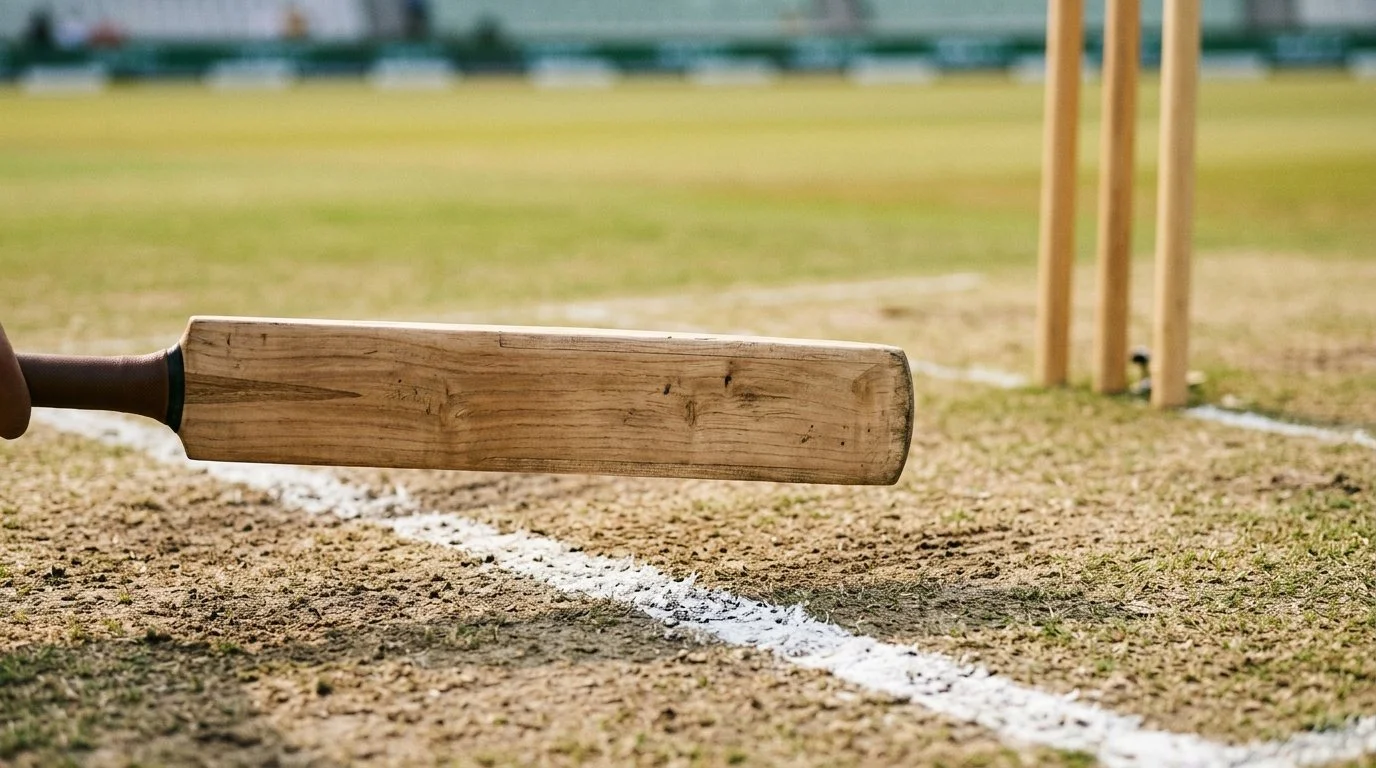
The popping crease is marked by a line. Under the general Law on a batter being out of their ground, a batter is considered out of their ground unless some part of their person or bat is grounded behind the popping crease at the relevant end, subject to the Law's important exceptions.
“Grounded” involves contact with the ground. A bat hovering above the surface is not automatically grounded simply because its shadow or outline appears beyond the line. The line itself has a defined role under the Laws; avoid using a blurred image to make a definitive judgement about contact or location.
The relevant end matters. Cricket has two ends, and the Law includes rules for determining which ground belongs to which batter. A casual description such as “both players reached a crease” is not enough to decide every unusual situation.
Also Read:BBL Betting: How the Power Surge Changes a Two-Over Window
A simple fictional run-out
Imagine Batter A runs toward the striker's end. A fielder throws the ball to a teammate who fairly breaks the wicket while the ball is in play. At that instant, A has not grounded their person or bat behind the relevant popping crease. If the other requirements of the run-out Law are satisfied and an appeal is upheld, A can be given out.
Now change one fact: A grounds the bat behind the crease before the wicket is properly broken and remains in their ground at the decisive moment. In the ordinary case A would not be out under the basic out-of-ground condition. The umpire's decision and the full Laws remain authoritative.
A Mahadev Book IPL Betting guide can provide IPL background, but it cannot replace the official result or a match official's decision on a particular incident.
The important bouncing-bat exception
The Law provides protection in specified circumstances when a batter running or diving toward their ground and beyond has already grounded part of their person or bat beyond the popping crease, but subsequently loses contact. This can address a bat that bounces after it was properly grounded during the movement.
The exception is not a blanket rule that any bat which was once behind the line makes a batter safe forever. The facts matter, including the movement and whether the batter had grounded the bat or person as required. Turning for another run or lifting a bat while stationary can raise different questions. Officials apply the full Law to the actual event.
If a replay shows a bat in the air when the wicket is broken, ask whether it was previously grounded in a qualifying running or diving movement. If you cannot see enough of the sequence, do not announce a definitive outcome from the final frame alone.
The Mahadev Book ID Login page concerns account access. A general account article cannot determine whether an exception applies to a real dismissal.
What does it mean to break the wicket?
The wicket must be put down in a manner permitted by the Laws. In an ordinary example, a ball striking the stumps dislodges a bail while the ball is in play. Other situations, including a wicketkeeper or fielder using the ball or hand in the required way, need the full provisions.
The exact moment matters. A replay may show the ball approaching the stumps, a bail starting to move and then a bail fully dislodged. The officials assess the evidence and apply the Law's definition of when the wicket is broken. A fan should not equate the first visible contact with a universally decisive instant in every case.
If a bail has already been removed or bails are not being used, additional rules apply. Do not rely on a simplified example to decide those unusual cases.
Run-out and stumping are different
Both can involve a batter being out of their ground and a wicket being broken, but they are distinct dismissal methods with separate conditions. A stumping generally involves the wicketkeeper and the striker under the relevant Law. A run-out can involve a fielder and either batter, depending on the circumstances.
A no-ball affects which dismissals are available. Run-out may still be possible under the Laws, but a broken wicket does not automatically make a batter out. The officials must determine whether all relevant requirements are met.
The Mahadev Book Login page concerns account access; it does not decide whether the officials recorded a run-out, stumping or another outcome.
Which batter is out?
When both batters are between the wickets, the Laws define which ground belongs to each. The answer can depend on their positions and prior movement. In a simple running example, each batter is heading toward an end, but unusual situations—such as both batters near the same end—require the detailed provisions.
A viewer should not assume the batter closest to the camera is the one at risk. The relevant question is which ground belongs to which batter under the Law when the wicket is broken. If a runner or other special circumstance is involved, further provisions apply.
A Mahadev Book Registration page about registration is separate from the sporting record. It should not be used as evidence of a dismissal or a player's status.
How to watch a close replay
- Identify the relevant wicket and the batter whose ground is being assessed.
- Establish whether the ball is in play and how the wicket is put down.
- Look for the batter's person or bat grounded behind the popping crease at the relevant moment.
- Check the earlier sequence for the specific running-or-diving exception.
- Wait for the officials' final decision and any official scorecard correction.
A broadcast freeze-frame may not show ground contact clearly. Camera angle, frame rate and obstruction can limit what a viewer sees. Match officials may have additional images or procedures depending on the competition.
The Mahadev App page provides app-related background; it does not verify a live score or an umpire's ruling.
Why a run-out may not appear in bowling wickets
A run-out is a team wicket but is not normally credited as a wicket to the bowler in the bowling analysis. The scorecard may identify the fielder or fielders involved. That distinction explains why the batting side's wickets lost can exceed the total credited to bowlers.
A stumping is normally credited to the bowler when the dismissal's conditions are satisfied. Do not choose the category merely because a wicketkeeper broke the stumps; the official decision and the relevant Law determine it.
Before writing a match update
State the official decision, the batter involved and the match situation. If the decision is being reviewed, call it provisional. Avoid claiming that an unseen frame proves the answer or that a bouncing bat is always safe. Update the report if the final official record changes.
Follow the decision in the correct order
A close dismissal involves several questions that should not be collapsed into one image. Was the ball in play? Which wicket was broken? Which batter's ground is being assessed? Was the wicket broken in a permitted manner? Was the batter out of that ground under the Law at the relevant moment? The officials then consider any applicable exception and appeal procedure.
A replay that answers one question may not answer all of them. For example, an image can show a bat near the line without showing whether the wicket has been properly broken. Another angle can show the wicket but obscure the batter's bat. A television viewer might have fewer images than the officials, so a confident conclusion from a cropped clip can be misleading.
In competitions with video review, the procedure and available cameras depend on the playing conditions. A review may confirm or change an on-field decision. Until the official result is announced, describe the decision as under review rather than treating the first graphic as final.
The bouncing-bat rule is about a sequence
Consider a fictional batter diving toward the relevant ground. The bat touches the surface beyond the popping crease while the batter continues the qualifying movement toward and beyond that ground. It then briefly loses contact before the wicket is broken. The Law's specific protection may apply even though the final image shows the bat in the air.
Now consider a different fictional batter who is standing still after playing a shot and raises the bat while outside the ground when the wicket is broken. The running-or-diving protection does not automatically cover that situation. Each case depends on the precise facts and full Law; the examples are not umpiring rulings for a real match.
The distinction is why it is useful to watch the whole sequence rather than only the frame of the broken wicket. Previously grounding the bat is relevant only in the circumstances described by the Law. It is not a general immunity after a batter has entered the ground once.
Crease terminology for a new viewer
The popping crease is the line used in assessing whether a batter is in their ground for these purposes. The wicket consists of the stumps and, where used, bails. The two ends of the pitch each have a ground, but determining which batter's ground is which can require more than simply observing where they began the delivery.
The terms “behind the crease” and “beyond the line” are often used in relation to the relevant wicket. They describe the ground on the wicket side of the popping crease, not merely any point on the field beyond the paint from a camera's viewpoint. A diagram can help, but the Law's definition governs.
A bat can be carried or held by the batter; an object lying independently in the ground is not automatically a substitute for the batter's person or bat under every imaginable circumstance. Unusual incidents require the actual Law and official decision rather than an improvised rule.
A close call at each end
Imagine two batters attempt a run. A fielder first attempts to break the wicket at one end and then the ball is returned to the other. The officials must consider the relevant batter and ground for each attempt, as well as when the ball is dead and whether an appeal is made. A replay of one end cannot automatically settle an attempt at the other.
If the first attempt results in a dismissal, subsequent play and scoring depend on the Laws and the point at which the ball becomes dead. Do not assume that every apparent run between the attempts necessarily counts. The official scorers record the outcome after the decision.
The example is deliberately general. It illustrates why each end and moment must be assessed separately, not a complete instruction for an umpire faced with an unusual sequence.
Reporting uncertainty accurately
A careful live report can say that the decision is being reviewed and describe what is visible: the batter is diving, the wicket has been broken and the available frame does or does not clearly show grounding. It should not claim certainty where the camera angle is inconclusive.
Once the result is official, update the dismissal type and the team score. If the decision is reversed, ensure that the fall-of-wicket list and any related statistics are also corrected. A live feed may update different sections at different speeds.
This approach respects both the Laws and the limits of observation. The visual drama of a close run-out is real, but the correct explanation depends on the entire event.
Grounding, contact and what a still image shows
A still image can show the position of a bat relative to the crease, but it may not show whether the bat is touching the ground. A shadow can be misleading, particularly under artificial light. Officials consider the evidence available in the competition's review process and the complete sequence.
A grounded foot can also be relevant under the Law. The batter is not required to use the bat if part of their person is properly grounded behind the popping crease, subject to the applicable provisions. Conversely, merely stretching an arm or bat across the line without grounding it does not establish safety under the basic rule.
Do not use a painted line as a stand-alone substitute for the Law's definition. The officials must determine the relevant ground, the moment and whether an exception applies. A spectator's simplified diagram is a learning aid, not an official measurement.
The scorecard after the decision
Once a batter is given out, the scorecard normally records the dismissal type, the batter involved and the team score at the fall of the wicket. A run-out may name fielders involved but is not normally credited to the bowler. A stumping is normally credited to the bowler when its conditions are met.
If an initial decision is overturned, the scorecard should reflect the official final outcome. A live feed might update the batting line before the fall-of-wicket list or vice versa. Compare timestamps and wait for the final official record before calling a temporary inconsistency an error.
A report should also distinguish the dismissal decision from a service's separate account terms. This article describes cricket, not how a third party might interpret an event. Website availability does not establish licensing, identity or local legality.
Three useful questions after a replay
Did the batter ground their person or bat behind the relevant crease before the wicket was broken? If contact was lost, did the specific running-or-diving exception apply? Did the officials announce a final decision? If the available footage does not answer those questions, say that the outcome is being reviewed.
These questions do not cover every possible runner, boundary or special-playing-condition issue. They offer a framework for following an ordinary close decision without turning an uncertain camera view into a confident verdict.
Keep the competition context visible
The general Laws provide a foundation, but a competition can have playing conditions governing reviews, technology and other procedures. A match without video review may rely on the officials' on-field view; another may use additional cameras under its stated protocol. Availability of technology is not itself a guarantee that every frame is conclusive.
When publishing a clip or summary, identify whether the decision is final and avoid presenting an unofficial replay as an independent ruling. If the official scorecard is corrected, update the report accordingly. The purpose of this checklist is to help a reader follow the decision, not to replace the umpire.
Official Regulatory & Industry References
Mahadev Book adheres to industry compliance, fair play principles, and statutory regulatory standards: