In the men's Big Bash League, a batting side can choose a two-over Power Surge in the later part of a full innings under the competition's established format. The fielding restrictions can change the shape of the contest, but they do not ensure a high score. A wicket, a skilful bowler or a chase that ends early can change the outcome.
For betting readers, the essential distinction is between understanding the cricket and assuming that a surge creates a predictable result. This is an educational guide, not a recommendation to gamble. Check current playing conditions and local laws before acting.
Also Read:BBL Betting: What the Designated Batter Rule Means for Team Selection
The BBL Betting page discusses IPL betting markets, not an assurance that BBL markets are offered.
What is the Power Surge?
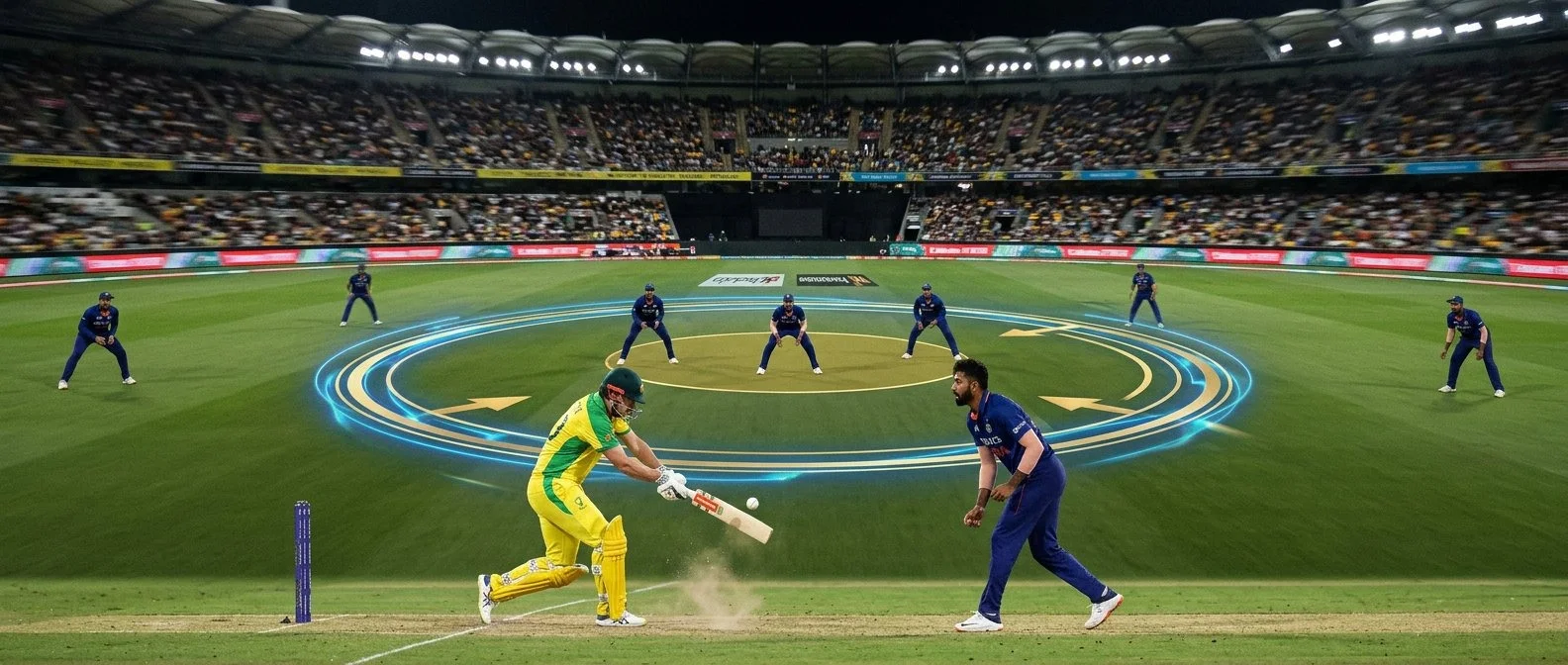
Cricket Australia's published explanation describes a two-over period that the batting team can call from the 11th over of the innings, with only two fielders permitted outside the inner circle. The initial powerplay is four overs rather than the six used in some other T20 competitions. Current competition conditions and any shortened-match adjustments should be checked for the actual fixture.
The decision is not simply “take it when the score is low.” A side weighs its current batters, remaining overs, wickets, target and available bowlers. The bowling captain can adapt the field and bowling plan within the rules.
The BBL Betting article compares odds across the IPL, BBL and PSL. It does not provide an official Power Surge decision for a live match.
Also Read:IPL Betting: Why a Live Over Market Can Look Different From the Broadcast
Three competing clocks
The overs clock: The window is available only within the applicable playing conditions. Waiting can preserve the option for later, but the innings may end before it is used.
The wickets clock: A pair of established batters may be better prepared to use the field restrictions than a new batter after a wicket. Yet preserving wickets for later can also mean missing a useful opportunity.
The chase clock: A chasing side close to its target may finish before a scheduled or hoped-for surge. A high required rate may encourage an earlier call, but neither circumstance dictates a captain's decision.
These clocks interact. No single factor is a dependable signal of a scoring burst.
The bowler's perspective
The fielding side may prepare a specialist for the surge, but the precise response depends on who has overs remaining and the conditions. A yorker, slower ball or accurate defensive length can still be effective with fewer boundary riders. A batter taking extra risk can also create a wicket opportunity.
A historical surge average should be interpreted with its sample size. One team's aggregate may include different grounds, players and opponents. Comparing two overs from one match with a whole-season average ignores changing conditions and selection.
A fictional scenario
After ten overs, a fictional team is 75 for 2. Two settled batters are in and a pace bowler is approaching the end of their allocation. The captain might take the surge immediately to exploit the field restrictions, or wait for another matchup. Neither choice guarantees more runs.
Change one fact: the team is 75 for 5 and a new batter has just arrived. The same score now describes a different risk profile because fewer wickets remain. Even then, a new batter might score rapidly, so the situation cannot determine the next two overs.
How to read a related market
Check whether the market covers a named over, two specified overs, the officially declared surge or an innings total. Those are different events. Confirm whether extras count, what happens if the surge is not taken and how an interruption or shortened innings is handled. Only the operator's applicable terms define its settlement.
Do not assume the start time or accepted price from a live screen. The broadcast, official feed and provider may update at different times. A suspended or repriced market can reflect several factors.
The BBL Betting odds-format guide explains how to interpret a price. A decimal price of 2.00 has a simple reciprocal of 50%, before accounting for margin; it is not a guarantee of a 50% true probability.
Do not confuse old and current innovations
The original BBL innovation package included the Power Surge, Bash Boost and X-Factor. The latter two were later removed; old articles can describe historical rules as though they still apply. Check the current men's competition conditions rather than importing a past bonus-point or substitution rule into a present match.
The newly announced designated batter and fielder arrangement for the upcoming men's season is a separate rule. It should not be treated as the old X-Factor or as proof that a particular player will be selected.
Make the responsible choice
Even an informed view can be wrong. If betting is legal and age-appropriate where you are, establish an affordable loss limit first, do not chase losses and do not use essential funds. Not betting is always an option.
The BBL Betting article covers gambling risks and responsible-gambling awareness. It does not validate a specific operator or bet.
The Mahadev Book Deposit transaction guide explains general payment status labels; it does not establish that a transfer was authorised or received.
The Mahadev Book Login account-access guide is not proof that a caller offering a surge prediction is genuine. Never share a password, OTP or payment PIN.
Early surge versus late surge: the trade-off
Taking the surge soon after it becomes available can give an established pair room to attack before a change of batter or bowler. It can also leave the side facing the final overs with ordinary fielding restrictions. A late surge may align with specialist finishers, but the innings may end before the full two-over period is used.
Neither schedule is universally better. The decision depends on wickets, remaining overs, the target and who is available to bowl. Historical counts of when captains chose the surge can describe past decisions, but they do not prove what a team should do in a new game.
What a two-over total leaves out
Imagine a fictional surge produces 18 runs and two wickets. Another produces 16 runs without a wicket. The first scored more immediately, but the loss of two batters may affect the remaining innings. Which was better depends on the match situation, remaining batting resources and what happened afterwards; the two-over total alone cannot answer it.
A bowling side's figures also require context. A bowler conceding ten runs in an over might have prevented boundaries, while another might have taken a wicket but conceded more. One over is too small to judge a player's overall quality, and it cannot reliably predict the next over.
Shortened matches and unplayed windows
If the innings is reduced, the competition's current conditions may modify when or whether a surge is available. A chase can also be completed before the batting side uses the option. Do not apply the full-innings timing mechanically to a shortened match.
For a betting market, read how the provider handles an unplayed or incomplete surge and whether the market refers to a specific numbered over or an officially declared period. Those terms can differ. A cricket rule does not automatically tell you how a private operator settles a particular wager.
A cautious evidence note
If a broadcaster calls a bowler a “surge specialist,” ask what evidence supports that label: number of overs, wickets, runs conceded and the opponents and grounds involved. Good performances may be real, but a handful of overs can vary sharply. Avoid using a highlight compilation as a substitute for a full record.
Map the field, then ask what is still unknown
During the Power Surge, the restriction on fielders outside the inner circle changes where a captain can place protection. It does not tell you precisely where the two permitted deep fielders will stand. The captain can choose positions based on the batter, the bowler's plan, the ground and the score.
A batter might try to hit over the infield, find a gap along the ground or rotate strike. Each option has a risk. A well-placed fielder can stop a boundary, and a mistimed lofted shot can create a catch. Fielding restrictions change the set of choices; they do not dictate the result.
The same restriction can be used differently on different grounds. A large outfield, boundary position, wind and pitch behaviour can influence tactics. Do not infer a particular scoring rate solely from the number of deep fielders.
How a captain might allocate bowlers
Imagine a fictional side has a fast bowler with one over remaining and a spinner with two. The batting team calls the surge. The captain must decide who bowls now and who is available later. An accurate fast bowler could limit boundaries, while the spinner might offer a favourable matchup against a particular batter. Either could concede runs or take a wicket.
If the surge is delayed, the team may use a preferred bowler earlier for another reason. A wicket or a change of ends can alter the plan. A pre-match allocation is therefore a hypothesis, not a confirmed sequence of overs.
A completed over's economy figure is also only one observation. When comparing bowlers, look at a larger relevant sample, the match phase, opponents and ground. Avoid labelling a player a guaranteed surge winner on the basis of a single highlight.
A chase can finish before the window
Suppose a fictional chasing side needs 15 runs with six overs remaining and the surge unused. The captain may not need to call it if the team can finish under normal restrictions. If the winning runs are scored before a surge is taken, any market tied to a declared surge requires the operator's specific settlement rule.
Now suppose the same side needs 60 from six overs with six wickets remaining. The captain has a different problem: more runs are needed per ball, but preserving wickets still matters. Calling the surge could change the field, not guarantee the required scoring rate.
A low target can end a match early; a high target can create pressure. Both affect opportunity. An analysis that treats every chase as a complete 20-over innings misses that variation.
Old rules and current conditions
When a source describes the original Power Surge alongside Bash Boost and X-Factor, check its publication date. Those latter innovations were removed after their initial period, while the surge continued. A historic article can accurately describe the old rules and still be inappropriate as a current guide.
For the upcoming men's competition, the designated batter and fielder option is a separate innovation. It changes potential team selection but is not a mechanism for adding a bowling substitute at the midpoint under the former X-Factor framework. Read the actual season's conditions, especially for any shortened-match provisions.
An after-match review
If you are learning from a completed game, record when the surge was called, who bowled, runs and wickets in the window, and the match state before and after. Include the outcome of the full innings, not only the two-over total. A surge of 20 without loss and a surge of 22 for three can lead to very different situations later.
Do not judge the captain's decision solely by whether it happened to succeed. A reasonable tactical choice can fail, and a risky choice can succeed. The distinction matters because one result does not establish a repeatable betting edge.
A scorecard example: same runs, different consequences
A fictional pair begins a surge at 110 for 2. In one possible sequence, they score 20 without losing a wicket. In another, they score the same 20 but lose three wickets. Both produce the same two-over run total, but the second leaves fewer batters available for the remaining overs. The innings outcome still depends on what happens next.
For a market covering only surge runs, wickets may not be part of the settlement unless the stated event includes them. For a match-winner market, the loss of wickets can be relevant to the evolving contest. Different questions require different evidence and terms.
Field restrictions and running between wickets
A field with fewer deep defenders can create opportunities for boundaries, but it can also place more players close enough to stop singles. The effect depends on field positions and execution. Batters may target gaps, take singles or attempt an aerial shot; no approach is guaranteed.
A surge can therefore produce a mixture of dots, singles, boundaries and wickets. A highlight reel tends to show the boundaries and dismissals, not every fielded ball. The complete scorecard offers a better description of what happened, though it still may not explain the tactical reason for each decision.
Applying the rule to interrupted play
A reduced innings may operate under adjusted field restrictions or surge provisions. Check the current competition document and the officials' announcements rather than assuming the full-innings arrangement is unchanged. A rain delay during the window can also produce a market-specific settlement question.
The official decision about how many overs remain and the operator's decision about an accepted bet are distinct. Save the exact market wording if participating lawfully, and ask the operator through a verified channel if the treatment of an incomplete window is unclear. Do not assume a generic refund rule.
What to check in a statistic
A published surge average should state the sample and period. Does it include all matches or just a club? Are abandoned or incomplete periods excluded? Are runs counted per over or per complete two-over window? Does the number combine several seasons with different squads?
A comparison between teams also needs context: a side frequently chasing small totals may have fewer full surges to measure. Selection, venue and match situation can affect the observed record. A statistic can accurately describe the past without predicting the next period.
A sensible stopping point
After checking the match state, available bowlers and current rules, some uncertainty remains. A surge may produce rapid scoring or a cluster of wickets. No betting price turns either result into a certainty. If a person chooses to gamble where lawful, an affordable pre-set loss limit and a willingness to stop matter more than a claim of a guaranteed tactical edge.
When a surge never happens
A side can win a chase or lose its final wicket before it uses a potential surge. In that case, a reader should not invent two surge overs from the remaining schedule. The official scorecard and match record describe what actually occurred.
A provider might offer a market on a declared surge, a named over or a wider innings period. If the relevant period is not played, its settlement depends on the operator's specific terms. Ask for a written explanation before betting if the condition is unclear; there is no universal answer.
A complete match review should include the innings length and whether the surge was taken. Otherwise a comparison across teams may mix full and incomplete opportunities and exaggerate the meaning of the average.
Official Regulatory & Industry References
Mahadev Book adheres to industry compliance, fair play principles, and statutory regulatory standards: