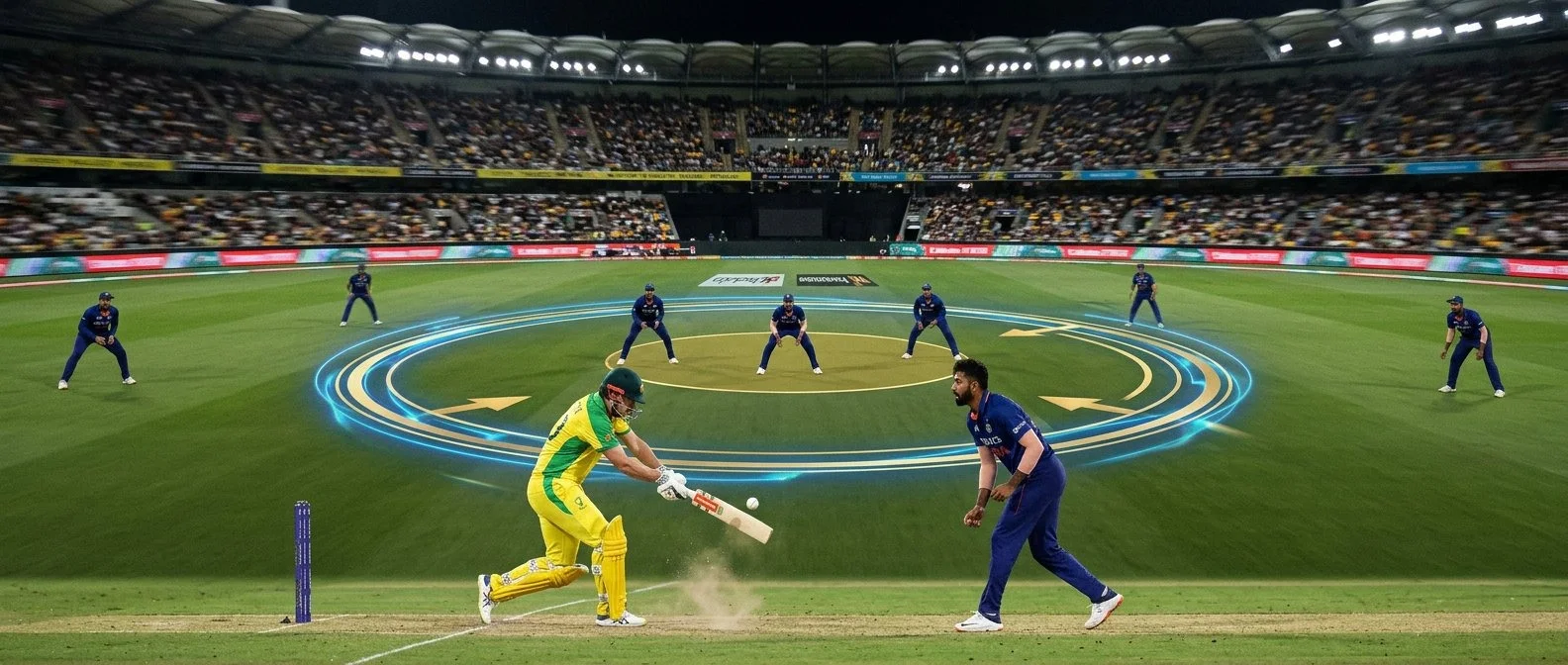
The men's Big Bash League has announced a designated batter and fielder option for its upcoming season. It changes how a team can allocate batting and fielding roles, but it is not the same as the IPL Impact Player system and does not guarantee that scores will rise.
This guide explains the announced framework and the questions a reader might ask about team composition and betting-market settlement. Confirm the final current playing conditions and match-day team sheet. The discussion is educational, not a recommendation to gamble.
Also Read:BBL Betting: How the Power Surge Changes a Two-Over Window
The BBL Betting page discusses BBL betting markets. It does not establish that the site offers BBL markets or that an operator is authorised.
The announced rule in plain language
Cricket Australia's announcement says a men's BBL team can choose to nominate a designated batter before the bat flip. That player can bat but cannot field or bowl. A team using the option must also name a designated fielder, who can field, including as wicketkeeper, but cannot bowl. A team can instead select a traditional XI.
Those role restrictions are crucial. The designated fielder is not a spare specialist bowler who can necessarily contribute overs. The designated batter is not simply a substitute who may be brought in at any time to bowl. The actual playing conditions govern the details.
The BBL Betting article compares odds across several cricket leagues. It is not the BBL's official rulebook or a match-day selection notice.
Also Read:IPL Betting: Why a Live Over Market Can Look Different From the Broadcast
Why a team might choose it
A side could use the designated batter option to include a specialist hitter without requiring that person to field. A separate designated fielder could strengthen the fielding unit or keep wicket. These are strategic possibilities identified from the rule, not claims that a particular club will select a specific player.
The choice has trade-offs. The designated fielder cannot bowl under the announced framework, so the remaining bowling options still need to cover the innings. A team that values a versatile all-rounder may prefer a traditional XI. Opponent, pitch, player fitness and the rest of the squad can all matter.
Not the IPL Impact Player
The IPL's Impact Player system has involved a tactical substitution under its own playing conditions. The BBL designated-role framework is nominated before the bat flip and separates a batter's role from a fielder's role. The two systems should not be presented as identical.
Even a player named in a squad or as a possible substitute may not take part in a given match. Check the official BBL team announcement and current conditions for who is actually selected and what each person may do.
A fictional selection exercise
Team A names a designated batter and a designated fielder who keeps wicket. Its remaining selected players must supply the bowling. A reader can count the likely specialist bowling options, then ask which players might provide cover if a bowler cannot complete an allocation.
The designated batter may open, bat in the middle order or not bat at all if the innings ends before their turn. The fielding specialist may make an important stop or take a catch, but that is not guaranteed. The rule creates a selection option; it does not establish a player's actual contribution.
Change the example: Team B chooses a traditional XI with an all-rounder. Its batting depth and bowling flexibility may differ from Team A's, but the preferred combination depends on individual players and conditions. Merely counting designated roles cannot determine which side is stronger.
What player-market terms may ask
A batting-runs market, fielding market and match-winner market measure different events. Review the provider's definition of participation: is a designated batter who does not bat treated as participating for that market? Is a designated fielder eligible for the stated market? What happens if a player is named but withdrawn?
Do not assume the answers. Providers' rules differ and can be updated. Ask the provider for its written terms, verify the channel independently and avoid participating if the wording is unclear.
The BBL Betting odds guide explains decimal prices and margins. A price is an offer, not proof of a player's selection or probability of success.
Read a price change carefully
A team announcement can coincide with a market move, but the move alone does not reveal the cause. A provider may change prices in response to multiple events or its own risk. A projected batting position is also not a guaranteed order.
If a news report predicts high scores under the new rule, treat it as a hypothesis. Actual totals will depend on surfaces, bowling, match situations and selection. A handful of early games is too small a sample to establish a lasting effect.
A practical match-day sequence
First, find the official selected team and identify whether a designated pair was named. Second, check each person's permitted role under the current conditions. Third, count the team's available bowling options without assuming every option bowls its full allocation. Fourth, read the exact market terms and assess whether uncertainty is too high. Fifth, remember that passing is a valid choice.
The BBL Betting responsible-gambling guide discusses the risk of loss. Set an affordable limit before any lawful betting, do not chase losses and never use money needed for essentials.
The Mahadev Book Deposit transaction guide explains general status labels; it cannot confirm the recipient or success of an individual payment.
The Mahadev Book Login account-access guide cannot authenticate a message promising selection news. Do not share passwords, OTPs or payment PINs.
Compare two fictional combinations
In the first combination, a side selects a designated batter, a designated wicketkeeper-fielder and several specialist bowlers. The extra role separation may let the captain choose a batter for a particular skill while retaining a dedicated keeper. It does not increase the number of bowlers by itself, since the designated fielder cannot bowl under the announced framework.
In the second combination, a team uses a traditional XI with a wicketkeeper who also bats and an all-rounder who can contribute in both innings. That side may have fewer separately designated specialists but more flexibility within the selected XI. The actual value of either arrangement depends on the named players, conditions and match state.
These examples deliberately avoid real-player predictions. A roster change, injury or altered playing condition can change the choices available for the actual match.
Why a rule change is difficult to measure
If average scores rise after a new rule, that does not establish that the rule caused the increase. Grounds, weather, player quality and scheduling can also change. If scores fall, the same caution applies. A small number of early matches is especially sensitive to unusual innings and different venues.
A more careful evaluation would compare many matches while accounting for other changes, and even then a causal conclusion can be difficult. A reader does not need to solve that statistical problem before watching a match; they should simply avoid treating an early pattern as proof.
Participation is a market-specific question
A player can be on the team sheet but not bat, or can field without bowling. For a designated pair, the distinction is explicit: each has a restricted role under the announced rule. Ask whether the particular market requires a player to take the field, face a ball, bowl a ball or satisfy another definition. Those possibilities are not interchangeable.
An operator's rules can also specify a source for the final score and a process for corrections. Save the relevant wording and any accepted confirmation. Do not rely on a social-media claim that “all providers settle it the same way.”
If a term seems inconsistent with the competition's rules, seek written clarification from the operator through verified contact details. An unclear market is a sound reason not to participate.
Start with the official team sheet
The announced option is not compulsory. A team can use a designated batter and fielder or select a traditional XI. The first task on match day is therefore to check what the team actually nominated, rather than assuming every side will use the innovation.
If a pair is named, identify the designated batter and fielder separately. Under the announced framework the batter may bat but not field or bowl; the fielder may field, including as wicketkeeper, but not bowl. The remaining selected players still need to cover all bowling required in the innings. Confirm the final playing conditions in case the competition updates details.
A team sheet does not normally reveal a guaranteed batting order or bowling allocation. A captain can react to wickets and conditions. A reader who sees a specialist batter in the side should not assume that batter will face a particular number of deliveries.
A closer look at wicketkeeping
The designated fielder can be a wicketkeeper under Cricket Australia's announcement. That permits a selection in which one player concentrates on batting while another keeps wicket. It does not require a team to make that choice, and it does not imply that a particular named player will keep.
A keeper's work can affect dismissals and runs saved, but a single chance may never arise. A player-runs market and a fielding-dismissals market therefore ask different questions. Read the operator's participation and settlement rules separately for each market.
The distinction also matters for injuries. A competition's current playing conditions govern substitutions and replacements, which need not be identical to the designated-role rule. Do not assume that any player can switch roles freely after the match begins.
Bowling depth is more than a head count
Count the players permitted to bowl, then consider their experience and likely roles. A side can have several nominal options but depend heavily on a small number for the most difficult overs. Conversely, an all-rounder may provide useful cover without bowling in every match.
In a fictional innings, a specialist bowler leaves the field injured after two overs. The captain needs remaining eligible players to cover the unbowled deliveries under the rules. A designated fielder who cannot bowl under the announced framework is not a general solution to that gap. This is a scenario, not a prediction about an actual fixture.
Why markets may disagree
A team-winner price reflects a broad outcome; an individual batter-runs line concerns a narrower event. A deeper batting lineup could affect the team as a whole without guaranteeing that a particular player will face enough balls. A designated fielder's contribution may be important without appearing in a simple runs total.
Do not add implied probabilities from unrelated markets as if they were a single forecast. If outcomes overlap, they can be correlated. The displayed prices also contain provider margin and can change. Read the specific event and terms before interpreting any number.
Evaluate a new pattern cautiously
Suppose the first three matches under the rule all produce high totals. Those three observations are interesting but do not isolate the effect of the rule. Different grounds, bowling attacks, weather and innings lengths can contribute. A single low-scoring match later would not by itself prove the opposite either.
For an editorial update, report the actual sample and its limits, rather than claiming that the rule “always increases scores.” Confirm official results and whether teams used the designated option. Match context is necessary before comparing totals.
A careful reader can follow a new selection rule without placing a wager. If choosing to bet where legal, decide an affordable limit beforehand and accept that any amount can be lost.
A team-balance checklist
Start with the official announcement: did the team nominate a designated batter and fielder, or a traditional XI? Then list the players permitted to bowl under the current conditions. Identify who can keep wicket and which players provide batting depth, without assuming an exact batting order.
Next, consider the opponent and ground. A side with several pace options may still choose spin for a particular matchup, and a batting specialist may never be required if the chase finishes early. A lineup creates possibilities; it does not dictate the sequence.
Finally, keep the cricket question separate from a provider's market. A player's permitted role under the competition rule does not automatically answer whether a particular wager has action. Read the market definition and the current competition document.
The danger of a simple score prediction
An extra specialist batter could alter a team's selection options, but the final score also depends on the bowling attack, pitch, wickets, weather and number of overs. If a designated batter scores quickly, that does not prove the rule caused the entire team's total. Another side may choose not to use the option and still score heavily.
The same caution applies to a player market. A player expected to bat in the top order might move down, or the innings might end before their turn. A long batting lineup can distribute opportunities among more people; it does not guarantee additional balls for each individual.
Check what is confirmed
Cricket Australia announced the rule for the upcoming men's BBL season. An announcement about a rule is not an announcement that a particular club or player will use it in the opening match. A coach's speculative example is not a final team sheet. Look for an official nomination for the fixture and verify any subsequent correction.
The announcement also distinguishes the designated fielder's role from bowling. Do not describe that player as an unrestricted substitute. Compare the final current playing conditions with the summary, especially if the league issues amendments.
Fictional questions from a reader
“Can the designated batter field?” Under the announced framework, no. “Can the designated fielder keep wicket?” Yes, the announcement says that is permitted. “Can the designated fielder bowl?” Not under the announced framework. “Must every team use the arrangement?” No; a traditional XI remains an option.
“Will a named batter definitely score runs?” No. Selection and permitted role do not determine performance or even guarantee a turn at the crease. “Will a player market be refunded if the batter never bats?” That depends on the specific operator's published terms, which should be checked before any lawful participation.
These questions make the rule easier to follow while preserving the uncertainty that matters in a real match.
A selection does not settle a market
A team sheet confirms a named role at a given point; an operator's terms define how an individual market treats that player's involvement. The two descriptions can use different language. A player can be selected as the designated batter but not get a turn to bat, for example.
Before any lawful participation, read the rule for that exact market and ask whether it distinguishes being named, appearing and performing an action. If the provider cannot explain the difference clearly, do not infer a universal rule from another operator's site.
The designated-role change is worth following because it can alter tactical choices, but it has not removed ordinary uncertainty about injuries, batting order, bowling plans or the weather.
Official Regulatory & Industry References
Mahadev Book adheres to industry compliance, fair play principles, and statutory regulatory standards: