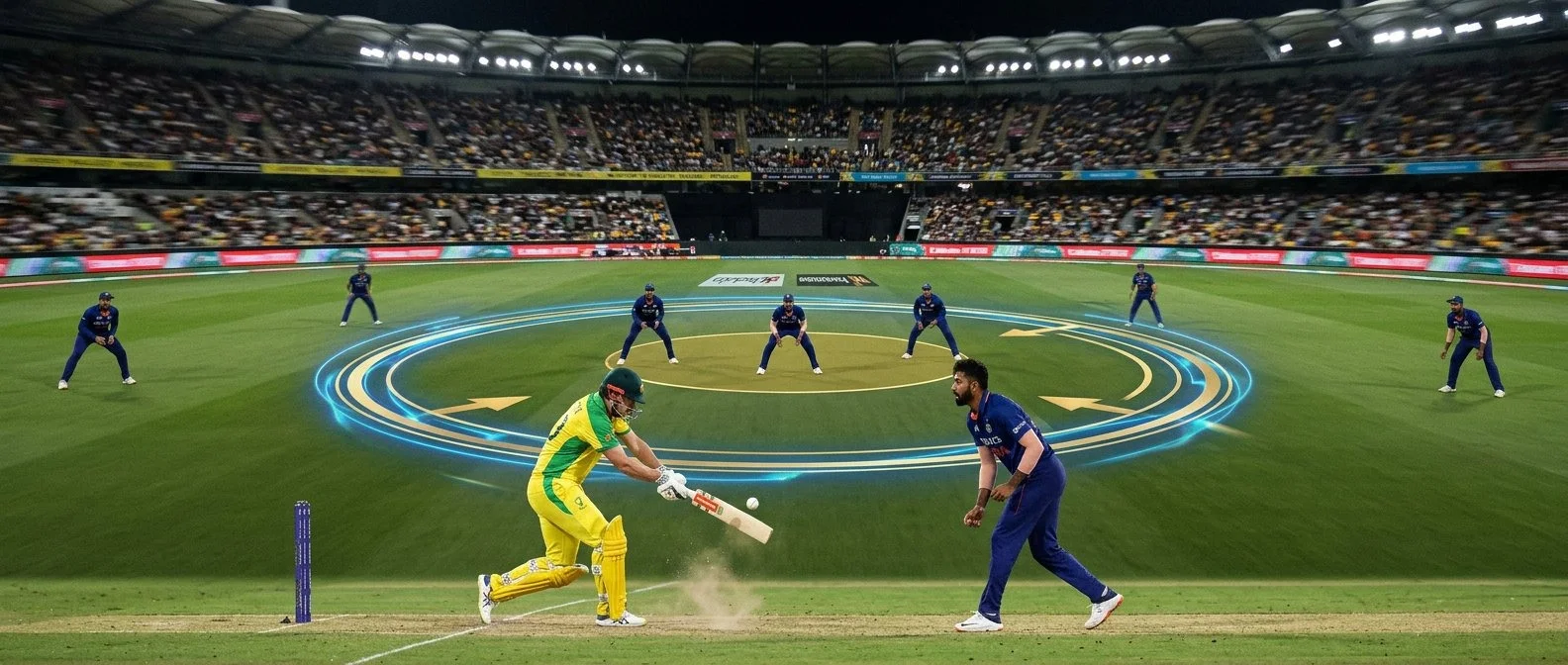
A left-hander meets a leg-spinner, a fast bowler returns for the final over, and the batting team needs a boundary. Those details can help explain an IPL contest, but a small head-to-head record cannot reliably predict the next delivery. Understanding that distinction is especially important when looking at player or match betting markets.
This is a cricket-analysis guide, not a prediction or a recommendation to bet. Check local law, age restrictions, the operator's authorisation and the exact market rules before using any gambling service. Do not use money needed for essentials, and consider not betting at all.
Also Read:BBL Betting: What the Designated Batter Rule Means for Team Selection
The IPL Cricket ID page discusses IPL betting markets. Its content does not verify an operator's licence or guarantee that a particular market is available.
Start with the opportunity, not the star name
A batter cannot score runs from a phase they never face. Before considering a matchup, ask where the player is likely to bat, whether the team is batting first or second and who else might use the available balls. A finisher entering late may face only a few deliveries even if their skill is excellent.
For a bowler, likely overs matter in the same way. A new-ball specialist may bowl early but not return at the death. A captain can also change the plan because of wickets, matchups, injury or conditions. The announced XI establishes who is selected, not exactly what will happen in each over.
The IPL Cricket ID article compares odds across cricket leagues. It is general context, not evidence that one IPL matchup is favourable.
Also Read:BBL Betting: How the Power Surge Changes a Two-Over Window
Separate a player record from a usable sample
Suppose a fictional batter has scored 24 runs from 12 balls against a particular bowler and been dismissed once. The strike rate is 200 and the dismissal rate is one per 12 balls in this tiny sample. Neither figure is a stable estimate of future performance: two boundaries or a single wicket would substantially change it.
Ask where and when the deliveries were bowled. A record built on different grounds, years and match situations may not transfer neatly to the next match. A bowler may have changed their approach, and a batter's role can change. Avoid treating a small sample as if it were a guarantee.
Aggregate records against a bowling type can provide more observations, but they introduce a different limitation: individual bowlers vary in speed, release, length and accuracy. More data can reduce one problem while introducing another.
A matchup has several moving parts
Bowling phase. Facing a new ball with fielding restrictions is not the same task as facing a defensive field at the end of an innings. Consider the likely phase before applying a player's overall strike rate.
Hand and angle. Left- and right-handed batters can change the bowler's line and the captain's field. Those effects depend on the players and the conditions; a hand-versus-spin label alone is not a verdict.
Venue and surface. Check the current pitch report and ground conditions. Historical totals may reflect earlier surfaces, different squads and weather. A boundary dimension may change where a batter targets, but it does not dictate the outcome of every shot.
Wickets and target. A batter with many wickets in hand may approach an over differently from one rebuilding after a collapse. A chase can end before a projected matchup occurs.
How a market question changes the analysis
A match-winner market asks for the outcome of the contest, subject to the operator's settlement rules. A batter-runs line asks about one player's credited runs, and a bowler-wickets line asks about wickets credited to that bowler. A run-out is generally not credited to the bowler. These are not interchangeable questions.
Read whether a market is void if the player does not participate, what counts as participation, whether a Super Over is included and what happens after an interruption. Rules can vary by operator and market. No linked page here establishes the terms of a specific wager.
The IPL Cricket ID article explains decimal and fractional odds and margins. Odds are prices offered by a provider, not proof that a result will happen.
Read a price without confusing it with certainty
For decimal odds of 2.00, the simple implied probability is 1 divided by 2.00, or 50%. A fictional 1.80 price implies approximately 55.6% before accounting for margin and other factors. A quoted return usually includes the original stake, but confirm the operator's actual terms.
The implied figures for all outcomes can sum to more than 100% because the provider's prices contain a margin. These numbers are not independently verified forecasts. A price that looks attractive can still lose, and even an informed analysis can be wrong.
Avoid common matchup traps
A viral clip often shows the most dramatic delivery, not the ordinary ones. One exceptional over cannot establish a repeatable edge. A headline that a batter “dominates” a bowler may omit the number of deliveries and match conditions.
Likewise, selection announcements can be late or changed. If a market depends on a player's participation, read the wording before assuming a non-selection will be settled in a particular way. If the information is unclear, waiting or not participating is a valid decision.
Do not chase a loss by increasing a stake on a second matchup. Set a limit before any lawful activity, and treat the entire amount as potentially lost. If gambling is affecting finances or wellbeing, stop and seek independent support.
The IPL Cricket ID page discusses gambling risks and responsible-gambling awareness. It does not make any outcome safer or certain.
A fictional match-day checklist
- Confirm the announced teams and the player's likely role, without assuming an unchanged batting order.
- Identify the market's actual event: runs, credited wickets or match result.
- Check the participation, interruption and settlement rules.
- Note the likely phase and whether the player is likely to face the relevant opponent.
- Record the size and context of any head-to-head sample.
- Compare the quoted price with your uncertainty; passing is always an option.
The Mahadev Book Deposit transaction-status guide explains general payment labels. It is not a reason to make a deposit and cannot verify an individual transaction.
The Mahadev Book Login account-access guide cannot establish whether a caller or prediction channel is genuine. Never share a password, payment PIN or one-time code to obtain supposed inside information.
Turning a matchup into a better question
A useful question is narrow: “How often does this batter face this bowling type in the opening phase, and how many observations support that?” A less useful question is “Who wins this matchup?” The latter hides the effect of field restrictions, remaining wickets, the bowler's actual allocation and the chance that the players never meet.
Consider two fictional openers. Both have scored 60 runs against right-arm pace in recent innings. The first faced 40 deliveries and the second faced 25. Their observed strike rates differ, but those samples still require context: number of dismissals, ground, opposition quality and whether the conditions resemble the coming match. Neither figure guarantees the next innings.
A sample can also be biased by selection. A batter who is dismissed early does not get to face later overs; a player promoted when runs are needed may face a different risk environment from one asked to rebuild. Comparing their raw scores without considering those roles can lead to a misleading conclusion.
Matchup records and market prices
The market may already reflect a well-known matchup or a player's expected role. If the quoted price changes after an XI announcement, do not assume you know the cause or that the new price is either too high or too low. A provider can change prices for multiple reasons, and historical results cannot reveal its reasoning.
If a player-runs market requires a player to bat for action, an unused player may be handled differently from a player who enters but faces no balls. Those terms are not universal. Read the precise rules and keep any accepted confirmation. A question about settlement should be directed to an independently verified support channel before participating.
Be especially careful with promotional claims of “inside information.” A person selling a guaranteed player outcome has an incentive to exaggerate. Match participants can be subject to strict anti-corruption rules, and no seller can make a future cricket event certain. Do not disclose account secrets or transfer additional money to unlock a tip.
What the team sheet leaves unresolved
A named batting lineup is not always the order used during the match. A wicket, left-right combination or tactical substitution can prompt a change. A captain may also use a bowler for fewer overs than anticipated if conditions or the match situation change.
Record the known and unknown factors separately. The official XI identifies selected players; the actual opportunity emerges during play. If the analysis depends on a sequence that may never occur, the uncertainty is part of the question, not a reason to invent confidence.
Build a phase-specific picture
A batter's overall strike rate combines very different tasks. An opener faces a new ball and a restricted field. A middle-order player may need to rotate strike against spin. A finisher may arrive with few balls remaining and be expected to take immediate risks. Combining these situations can make an individual rate look precise while hiding why it was achieved.
For a fictional assessment, split a player's deliveries into opening, middle and closing phases. Note runs, balls and dismissals for each phase. If the player has only faced a few balls in one phase, mark the figure as uncertain. Do not convert a small observed rate directly into a promise about a future over.
Apply the same idea to bowlers. A new-ball bowler and a death specialist may have different economy rates partly because they bowl in different situations. Compare similar phases before drawing conclusions. A lower economy in one phase does not automatically mean the bowler should be expected to repeat it in another.
Pair the batter's method with the bowler's options
A batter who favours an aerial stroke may prefer a particular line or length, while a bowler may try to deny that area. A left-right partnership can require the fielding side to adjust, but whether it helps depends on the actual players and the captain's field. Consider the interaction rather than declaring either hand inherently superior.
If a bowler uses slower deliveries at the end of an innings, the batter's response can depend on pitch speed, boundary placement and the match score. A previous dismissal to a slower ball can be worth noting, but one dismissal does not show a permanent weakness. Equally, a highlight of a six does not establish that the batter has solved the matchup.
Watch for the distinction between a plan and execution. A captain may reserve a particular bowler for a batter, but a wicket, injury or early use of overs can make the plan impossible. A reader who assumes the meeting is certain risks building an entire view on an event that never occurs.
Reconstruct a fictional innings
A fictional side begins a chase of 165. Its opener faces a left-arm seamer in the first over and hits one boundary. Later, the seamer is held back for the final overs, but the opener is dismissed before that return. A pre-match projection that expected a second encounter did not materialise, even though the bowler's allocation was broadly as anticipated.
Now imagine the opener survives until the final phase, but the chase ends in the 18th over. A bowler expected to deliver the 20th has no opportunity to do so. The batter's skill and the bowler's plan did not change; the available deliveries did. This is why opportunity is part of any matchup assessment.
If the first innings had ended early or been shortened by rain, the available opportunities could change again. The operator's settlement rules would answer a separate question about any market. A cricket narrative is not a substitute for those rules.
Think about uncertainty explicitly
Write down a range of plausible situations rather than one exact script: the batter faces the bowler early, faces them late, or never faces them. Ask which assumptions must hold for each scenario. If several assumptions are uncertain, acknowledge that the entire analysis is fragile.
A useful note might say: “The batter usually opens, the bowler often starts, and both are selected, but the captain could alter the opening bowler.” That is more informative than “the batter will face the bowler.” Use official selections and reliable data, but do not invent information that has not been announced.
Prices express an operator's offer, not an instruction to participate. Even a carefully considered view can be wrong because cricket outcomes are variable and because the available information is incomplete.
Reading head-to-head numbers without a false sense of precision
Suppose a batter has faced a bowler for 18 balls and scored 30 runs with one dismissal. The arithmetic produces a strike rate of about 166.7. It does not mean the batter will score at that rate in the next meeting. A single dot ball changes the denominator; a single dismissal changes the wicket record substantially.
For a more rounded description, include the number of balls and dismissals alongside the rate. Check whether the source counts only the IPL or all formats, and whether it includes old meetings. A combined career figure can mix different competitions and conditions. An unlabelled statistic is difficult to interpret.
If comparing two players, look at their sample sizes as well as their averages. A player with a spectacular figure from ten balls may have a less informative record than one with a less dramatic figure from several hundred. A larger sample still does not solve every problem: the role, opponents and conditions may have changed.
Wickets change opportunity
An opener who survives the first phase may face several bowling types; an opener dismissed early does not. A lower-order batter might enter after a collapse or may not be required in a successful chase. Those possibilities affect both the number of balls faced and the risk taken when batting.
A fictional batter projected to face 20 balls might face five if the chase ends quickly, or 35 if wickets fall early and the batter comes in sooner. Neither outcome proves the pre-match role description was necessarily wrong. It shows that the path through the innings matters.
For a bowler, wickets can change the captain's plan too. A spinner intended for a set batter may instead face a new batter, or a pace bowler may be needed earlier than expected. Check the official bowling figures afterwards rather than assuming the planned matchup happened.
A repeatable research workflow
Before match day, identify the players' ordinary roles and obtain relevant historical figures from a reputable score database. Record the competition, period, phase and sample size. Do not combine an unlabelled record from several formats with an IPL-only figure as though they measure the same thing.
At selection, verify the XI and any substitute list. Note what remains uncertain: batting order, bowling allocation, conditions and market settlement. After the match, compare the actual sequence with your assumptions. If a projected encounter did not occur, mark it as a failed assumption rather than explaining the result after the fact.
The workflow helps organise information, but it does not generate a guaranteed edge. If a price, market rule or source cannot be understood, the simplest choice is to avoid that market. An analysis of cricket is valuable even when no money is placed.
Official Regulatory & Industry References
Mahadev Book adheres to industry compliance, fair play principles, and statutory regulatory standards: