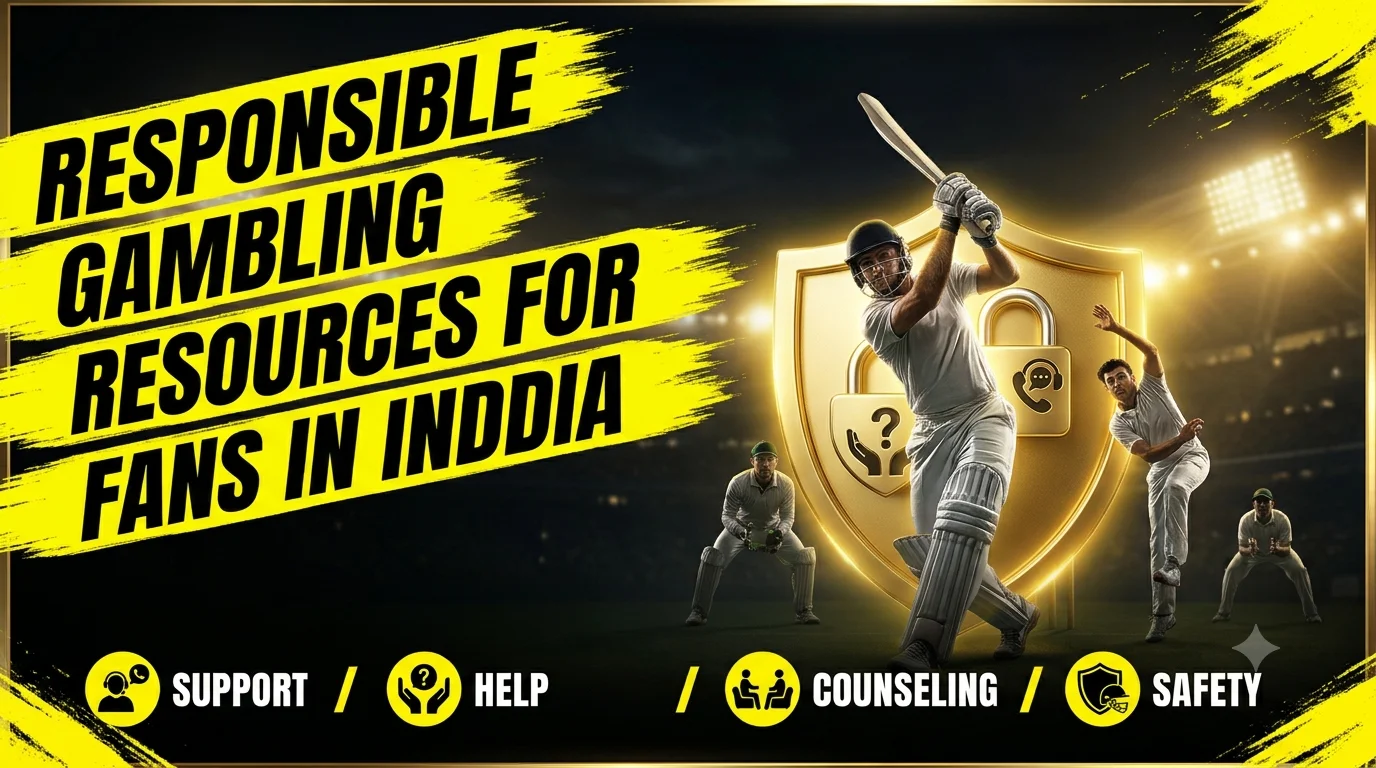
Cricket is more than a sport for millions of fans across India. From the Indian Premier League (IPL) to international tournaments, matches bring excitement, competition, and passionate discussions. However, when financial wagering becomes part of the experience, cricket fans may face risks involving money, mental health, online fraud, and gambling addiction.
For individuals exploring cricket betting online, understanding responsible gambling resources is essential. Gambling can lead to financial losses, and repeated participation may become difficult to control. Knowing where to find reliable information, recognize warning signs, and access professional support can help prevent further harm.
In India, gambling-related assistance may be available through mental-health helplines, government-supported services, healthcare professionals, financial counseling, and international peer-support organizations. These resources can help individuals experiencing gambling problems and families affected by them.
This guide explains responsible gambling, identifies useful support resources for cricket fans in India, explores self-exclusion and financial safeguards, and provides practical steps for dealing with gambling-related difficulties.
Cricket fans in India experiencing gambling-related problems can seek support through Tele-MANAS (14416), qualified mental-health professionals, government healthcare services, and gambling-focused peer-support organizations. Helpful protective measures include stopping betting, restricting access to gambling platforms, protecting essential finances, and seeking assistance early. Anyone facing severe emotional distress or immediate danger should contact emergency services.
What Is Responsible Gambling?
Responsible gambling refers to practices intended to reduce the financial, psychological, and social harms associated with gambling.
These practices include understanding financial risks, recognizing potentially harmful behavior, respecting legal restrictions, and using available safeguards.
However, responsible gambling does not mean that gambling is safe or financially reliable.
Even people who understand betting odds and cricket statistics can lose money or experience difficulties controlling their behavior.
Key Principles of Responsible Gambling
Important principles include:
-
Recognizing that gambling outcomes are uncertain.
-
Never treating betting as a dependable source of income.
-
Avoiding gambling with borrowed money.
-
Protecting money needed for essential expenses.
-
Recognizing the warning signs of harmful gambling.
-
Avoiding attempts to recover losses through further wagers.
-
Seeking professional assistance when gambling becomes difficult to control.
-
Following applicable age restrictions and gambling laws.
For someone already experiencing gambling-related harm, stopping participation may be more appropriate than attempting to manage continued betting.
Responsible Gambling Versus Gambling Addiction
Responsible gambling describes protective practices, while gambling disorder is a recognized behavioral addiction.
Gambling disorder involves persistent or recurring gambling behavior that causes significant distress or impairment.
A person experiencing gambling disorder may continue betting despite debt, relationship problems, or repeated unsuccessful attempts to stop.
Professional assessment can help determine whether symptoms meet clinical diagnostic criteria.
Why Responsible Gambling Awareness Matters for Cricket Fans in India
Cricket provides frequent opportunities for emotional engagement, particularly during major tournaments.
A last-over finish, unexpected wicket, or successful run chase can create intense excitement.
When gambling is involved, these events may also trigger impulsive financial decisions.
The Influence of Live Cricket
Live cricket betting can involve repeated decisions during a single match.
Changes in scores, wickets, and match conditions may encourage people to react quickly rather than consider financial consequences.
This can be particularly problematic for individuals who already struggle with gambling control.
The Risk of Chasing Losses
Chasing losses means continuing to gamble in an attempt to recover previously lost money.
For example, someone who loses ₹2,000 may feel pressure to place another wager to recover that amount.
If the next wager also loses, the financial problem can become more serious.
Previous losses do not improve the probability of winning future bets.
Social and Financial Pressure
Gambling-related problems can affect entire households.
Debt, secrecy, financial disagreements, and emotional distress may place pressure on family relationships.
Responsible gambling education therefore benefits not only individuals who gamble but also friends and relatives who may recognize early warning signs.
Responsible Gambling Helplines and Support Resources in India
People experiencing gambling-related difficulties can seek assistance through mental-health services, healthcare professionals, and community support organizations.
Not every mental-health service specializes in gambling disorder, but general services can provide an important starting point.
1. Tele-MANAS: Government Mental Health Support
Tele-MANAS is India's national tele-mental-health service, developed under the Ministry of Health and Family Welfare.
Tele-MANAS: 14416
Government-supported mental-health assistance in India. People experiencing gambling-related anxiety, distress, or difficulty coping can ask for guidance and appropriate referral options.
Tele-MANAS is not exclusively a gambling addiction helpline.
However, it can be a useful first contact for someone experiencing anxiety, emotional distress, or other mental-health concerns connected with gambling.
Service details and availability should be checked through official government sources.
2. District Mental Health Programme
India's District Mental Health Programme supports access to mental-health services through participating public healthcare facilities.
Individuals can inquire at government hospitals or district health facilities about available psychiatric, psychological, or counseling services.
Access to specialists and treatment options may vary by location.
3. Qualified Mental Health Professionals
Psychiatrists, clinical psychologists, and appropriately trained counselors can help assess gambling-related problems.
Treatment may address compulsive gambling behavior, anxiety, depression, financial stress, and associated difficulties.
Cognitive behavioral therapy (CBT) is among the psychological approaches used to treat gambling disorder.
4. Gamblers Anonymous
Gamblers Anonymous is an international peer-support fellowship for people who want to stop gambling.
Meetings and participation arrangements depend on local availability.
People in India can explore whether suitable online or accessible meetings are available through the organization's established information channels.
Peer support may complement professional treatment but should not be considered a replacement for necessary clinical care.
5. Financial Counseling and Debt Assistance
Gambling-related debt can create additional psychological pressure.
Financial counselors and qualified debt advisers may help individuals review obligations, prioritize essential expenses, and explore lawful repayment arrangements.
Anyone seeking debt assistance should verify the adviser's credentials and avoid services promising guaranteed debt elimination or immediate financial recovery.
Comparison of Responsible Gambling Support Resources
|
Resource |
Main Purpose |
When It May Help |
|---|---|---|
|
Tele-MANAS |
Mental-health guidance and support |
Emotional distress or difficulty coping |
|
Government hospitals |
Medical and mental-health assessment |
Persistent or severe gambling-related symptoms |
|
Clinical psychologists |
Psychological assessment and therapy |
Compulsive gambling and behavioral difficulties |
|
Psychiatrists |
Mental-health diagnosis and treatment |
Gambling disorder with significant psychological symptoms |
|
Gamblers Anonymous |
Peer support and recovery fellowship |
Ongoing support for stopping gambling |
|
Financial counseling |
Debt and budgeting assistance |
Gambling-related financial difficulties |
|
Emergency services |
Immediate safety assistance |
Urgent danger or medical emergencies |
People facing immediate danger in India can contact the national emergency response number, 112.
How to Recognize Gambling Addiction Among Cricket Fans
Recognizing problematic gambling early can reduce the likelihood of escalating harm.
A person does not need to lose a large amount of money before gambling becomes a concern.
The impact on daily life is often more important than the amount wagered.
Financial Warning Signs
Financial indicators may include borrowing money to gamble, using household savings, missing bill payments, or hiding transactions.
Some people begin selling personal possessions or taking additional loans to continue gambling.
These behaviors suggest that gambling is interfering with financial stability.
Emotional Warning Signs
Possible emotional symptoms include anxiety, guilt, irritability, persistent worry about losses, and difficulty concentrating.
Someone may feel restless when unable to access gambling opportunities.
Others may use gambling to escape stress or negative emotions.
Behavioral Warning Signs
Common behavioral indicators include:
-
Spending increasing amounts of time thinking about betting.
-
Repeatedly attempting to recover losses.
-
Hiding gambling activity from family members.
-
Neglecting work, education, or relationships.
-
Returning to gambling after unsuccessful attempts to stop.
-
Continuing despite serious financial consequences.
These symptoms warrant attention, particularly when they persist or become more severe.
How to Stop Cricket Betting Online: Practical Steps
Stopping gambling can be challenging when betting has become part of a daily routine.
A structured approach can help individuals reduce exposure and access support.
Step 1: Stop Placing New Wagers
The first priority is to prevent further financial losses.
Avoid placing additional wagers to recover money already lost.
Existing losses do not make future betting outcomes more favorable.
Step 2: Restrict Account Access
People using cricket betting sites can look for available account-closure, cooling-off, or self-exclusion arrangements.
The availability and effectiveness of these tools vary between services.
Where self-exclusion is unavailable or unreliable, device-level website blocking and financial transaction restrictions may provide additional protection.
Step 3: Remove Gambling Triggers
Uninstall gambling-related applications and disable promotional notifications.
Consider reducing exposure to gambling advertisements, prediction groups, and social-media accounts that encourage wagering.
For some people, watching cricket without betting-related content can help separate enjoyment of the sport from gambling behavior.
Step 4: Protect Essential Finances
Review bank statements and identify gambling-related spending.
Prioritize rent, food, utilities, healthcare, education, and debt obligations.
Where appropriate, discuss temporary financial safeguards with a trusted family member or qualified adviser.
Step 5: Seek Professional Assistance
Contact a mental-health professional if gambling urges remain difficult to control.
Professional support can help identify triggers, address harmful thought patterns, and develop recovery strategies.
What Is Self-Exclusion in Online Gambling?
Self-exclusion is a protective measure that restricts an individual's access to gambling services for a specified period or, where available, indefinitely.
Its purpose is to help people who want to stop gambling.
How Self-Exclusion Generally Works
Depending on the operator and jurisdiction, a person may request that their gambling account be restricted or closed.
Some regulated markets provide broader exclusion arrangements covering multiple participating operators.
However, these systems are not universally available.
People should not assume that every cricket betting website provides effective self-exclusion or that an exclusion request will automatically apply across unrelated services.
Self-Exclusion Versus Cooling-Off
A cooling-off period is generally a temporary break from gambling access.
Self-exclusion is often intended as a stronger protective measure for people experiencing gambling-related difficulties.
The precise definitions and available periods vary by service and regulatory framework.
Neither measure guarantees recovery from gambling addiction.
Professional assistance and financial safeguards may still be necessary.
How to Evaluate Responsible Gambling Information on Websites
People researching a cricket betting website should distinguish between responsible gambling statements and independently verifiable consumer protections.
A website may display warnings or general advice without providing effective tools for people experiencing gambling harm.
Information Worth Checking
Relevant information includes whether a service clearly explains:
-
Age and identity-verification requirements.
-
Applicable jurisdictional restrictions.
-
Account closure and self-exclusion procedures.
-
Financial risks and gambling-related harm.
-
Privacy and personal-data handling.
-
Complaint and dispute procedures.
-
Independent support resources.
These disclosures should be assessed critically.
The presence of responsible gambling language does not establish that an operator is licensed, lawful, secure, or trustworthy.
Why Independent Verification Matters
Claims about regulatory approval should be checked with the relevant authority.
Users should avoid relying solely on advertisements, testimonials, or statements published by the operator itself.
A website's accessibility from India does not establish that its services are legally permitted.
Financial Protection Resources for People Experiencing Gambling Losses
Financial problems are among the most common reasons people seek gambling-related assistance.
Losses can affect household budgets, debt repayments, savings, and long-term financial security.
Create a Clear Financial Overview
Begin by identifying outstanding debts, available income, essential expenses, and upcoming payment obligations.
A written overview can help establish the scale of the problem.
Avoid treating potential future gambling winnings as expected income.
Prioritize Essential Expenses
Housing, food, healthcare, utilities, and necessary transportation should take priority over gambling-related spending.
If essential bills cannot be paid, seek advice from an appropriate financial professional or creditor before the situation escalates.
Avoid Borrowing to Recover Losses
Taking additional loans to fund gambling can create a cycle of debt.
Borrowed money does not improve the probability of a successful wager.
People facing serious debt should seek qualified financial assistance rather than attempting to solve the problem through further gambling.
Consider Banking Safeguards
Some financial institutions may offer transaction controls or spending-management features.
Availability varies.
Individuals can ask their bank about relevant account protections and ways to report unauthorized transactions.
Online Gambling Fraud and Cybercrime Reporting in India
Fraud is a separate but related risk associated with online gambling.
People searching for cricket gambling sites may encounter impersonation attempts, fake customer-support accounts, misleading payment requests, or fraudulent promises of guaranteed returns.
Common Warning Signs
Potential warning signs include demands for additional payments to release funds, requests for passwords or one-time authentication codes, and pressure to transfer money to unrelated accounts.
Fraudsters may also use fake applications or websites resembling established brands.
What to Do if You Suspect Fraud
Preserve transaction records, messages, screenshots, and other relevant evidence.
Contact your bank or payment provider promptly.
In India, suspected cybercrime can be reported through the National Cyber Crime Reporting Portal. The national cybercrime helpline, 1930, is also used for reporting cyber-enabled financial fraud.
Reporting does not guarantee that lost money will be recovered.
However, prompt action may help authorities and financial institutions respond.
Legal Considerations for Cricket Gambling in India
The legal framework for gambling in India is complex and subject to change.
Rules may differ according to the activity, location, applicable legislation, and regulatory developments.
People researching sportsbook india should not assume that a platform is legally authorized simply because it is accessible online.
Age Restrictions
Gambling services may be subject to age restrictions under applicable laws and operator requirements.
Minors should not participate in gambling.
Adults should also avoid attempting to bypass identity verification or geographic restrictions.
Regulatory Claims
A platform's statement that it operates under an international license does not automatically establish legal authorization in India.
Licensing and regulatory information should be independently verified.
Because laws and enforcement practices can change, users should consult current authoritative legal information when determining whether an activity is permitted.
How Families Can Support Someone With a Gambling Problem
Family members often notice changes in behavior before an individual seeks assistance.
These changes may include unexplained financial difficulties, secrecy, emotional distress, or reduced participation in everyday activities.
Start a Supportive Conversation
Choose a calm moment to discuss concerns.
Focus on specific observations rather than accusations.
For example, it may be helpful to explain that unpaid bills or repeated borrowing have created concern.
The goal is to encourage openness and access to assistance.
Establish Financial Boundaries
Family members can protect shared finances by reviewing joint obligations and agreeing on appropriate safeguards.
Avoid providing unrestricted money that may be used to continue gambling.
At the same time, individuals experiencing addiction should be treated with dignity and encouraged to seek professional help.
Encourage Treatment
Offer assistance in locating a qualified counselor, psychiatrist, or appropriate mental-health service.
Family members may also benefit from counseling or peer support, particularly when gambling has affected trust or household stability.
Enjoying Cricket Without Financial Gambling
Cricket fans can enjoy the sport without placing money on match outcomes.
Alternative activities include analyzing scorecards, following player statistics, joining cricket clubs, participating in friendly discussions, and organizing non-monetary prediction competitions.
Fantasy and Prediction Activities
Not all fantasy sports or prediction activities have the same legal or financial characteristics.
Activities involving entry fees, prizes, or financial stakes may introduce gambling-related risks or legal questions.
For people seeking to avoid gambling, free activities without monetary rewards are generally the clearer alternative.
Cricket Statistics and Match Analysis
Fans can study batting averages, bowling economy rates, pitch conditions, and match probabilities purely for educational or recreational purposes.
Statistical analysis does not require financial wagering.
Community Participation
Playing recreational cricket, volunteering with local clubs, or attending matches can strengthen social connections without introducing betting-related financial exposure.
For individuals recovering from gambling disorder, activities that do not trigger betting urges may be particularly beneficial.
Responsible Gambling and Online Cricket Gambling: Important Distinctions
Responsible gambling information should not be confused with encouragement to participate.
People researching online cricket gambling may encounter terms such as betting limits, bankroll management, and safer gambling.
These concepts do not eliminate the possibility of financial loss or addiction.
|
Concept |
Meaning |
Important Limitation |
|---|---|---|
|
Spending limits |
Restrictions on gambling expenditure |
Limits may not prevent compulsive behavior |
|
Time limits |
Restrictions on gambling duration |
Financial harm can occur quickly |
|
Cooling-off |
Temporary restriction on access |
Urges may return after the restriction ends |
|
Self-exclusion |
Longer-term access restriction |
Coverage varies by service |
|
Professional counseling |
Support for harmful gambling behavior |
Treatment may require ongoing participation |
|
Financial counseling |
Assistance with debt and budgeting |
Existing losses are not automatically recoverable |
|
Gambling abstinence |
Avoiding gambling participation |
Eliminates new gambling wagers but may require support to maintain |
For people already experiencing gambling-related harm, abstinence and professional assistance may be more appropriate than relying only on spending controls.
Frequently Asked Questions About Responsible Gambling in India
1. What are the main responsible gambling resources available in India?
Resources include Tele-MANAS, government hospitals, qualified mental-health professionals, financial counselors, and gambling-focused peer-support organizations. Tele-MANAS can provide general mental-health guidance, while clinical professionals can assess gambling-related problems. Availability of specialist gambling treatment varies by location, so individuals may need referrals through broader healthcare services.
2. Is there a gambling addiction helpline in India?
India has general mental-health support services that can assist people experiencing gambling-related distress. Tele-MANAS can be reached at 14416. It is not exclusively a gambling addiction helpline, but it can provide an initial point of contact. People requiring specialist treatment can also consult psychiatrists or clinical psychologists.
3. How can I stop cricket betting online permanently?
Stopping cricket betting may involve closing accounts, requesting self-exclusion where available, blocking gambling websites, disabling promotional messages, and protecting access to money. Professional counseling can help address persistent urges and underlying triggers. A recovery plan is often more effective when it includes practical safeguards and support from trusted individuals.
4. What are the warning signs of cricket betting addiction?
Warning signs include chasing losses, borrowing money to gamble, concealing transactions, neglecting responsibilities, and repeatedly failing to stop. Emotional symptoms such as anxiety, irritability, and persistent preoccupation with betting may also occur. A qualified mental-health professional can assess whether these behaviors indicate gambling disorder.
5. Can responsible gambling tools prevent financial losses?
Responsible gambling tools may reduce certain risks, but they cannot guarantee protection against losses. Spending limits, time restrictions, and self-exclusion may help some individuals manage or stop gambling activity. However, betting outcomes remain uncertain, and people experiencing compulsive gambling may need stronger interventions, including abstinence and professional support.
6. How can I report fraudulent cricket betting activity in India?
Suspected online financial fraud can be reported through India's National Cyber Crime Reporting Portal or the cybercrime helpline, 1930. Preserve transaction details, messages, and other evidence. Contact your bank or payment provider promptly if financial information has been compromised. Reporting an incident does not guarantee recovery, but timely action is important.
7. Is online cricket betting legal in every Indian state?
No uniform assumption should be made about the legality of online cricket betting across India. Gambling laws and restrictions may depend on jurisdiction, activity type, and current legislation. Website accessibility does not establish legal authorization. Anyone considering an activity involving financial stakes should verify the applicable legal position using authoritative information.
8. What should I do if I lose a large amount of money through cricket betting?
Stop placing additional wagers and avoid attempting to recover losses through further gambling. Review your finances, prioritize essential expenses, and contact a qualified debt adviser if necessary. If losses are causing serious emotional distress, seek mental-health support. Suspected fraud or unauthorized transactions should also be reported promptly to the appropriate financial institution or authority.
9. Can family members help someone recover from gambling addiction?
Yes. Family members can offer emotional support, encourage professional treatment, and help establish appropriate financial boundaries. Calm conversations and practical assistance may make it easier for someone to seek help. However, recovery can be complex, and family support should complement rather than replace qualified clinical care when gambling disorder is suspected.
10. Can cricket fans enjoy match predictions without gambling?
Yes. Cricket fans can analyze statistics, discuss match probabilities, and participate in free prediction activities without placing financial wagers. These alternatives allow people to enjoy cricket's competitive uncertainty without risking money. Individuals recovering from gambling-related problems should choose activities that do not trigger urges to resume betting.
Responsible gambling awareness is essential for cricket fans in India because gambling-related harm can affect finances, mental health, relationships, and personal security. Understanding the warning signs of addiction, recognizing fraudulent activity, and knowing where to find reliable assistance can help individuals respond before problems become more serious.
Resources such as Tele-MANAS, qualified mental-health professionals, peer-support groups, and financial counseling services can provide valuable assistance. Self-exclusion, account restrictions, and reduced exposure to gambling promotions may also support people who want to stop.
Anyone researching cricket betting online should remember that betting is not a dependable source of income and that no prediction method can eliminate financial risk.
When encountering cricket-related services such as Mahadev Book, users should independently verify applicable laws, operator credentials, and available consumer safeguards. The service should not be assumed to provide clinical support or effective self-exclusion without verification. Protecting personal well-being, seeking timely assistance, and enjoying cricket without financial pressure remain the most important priorities.