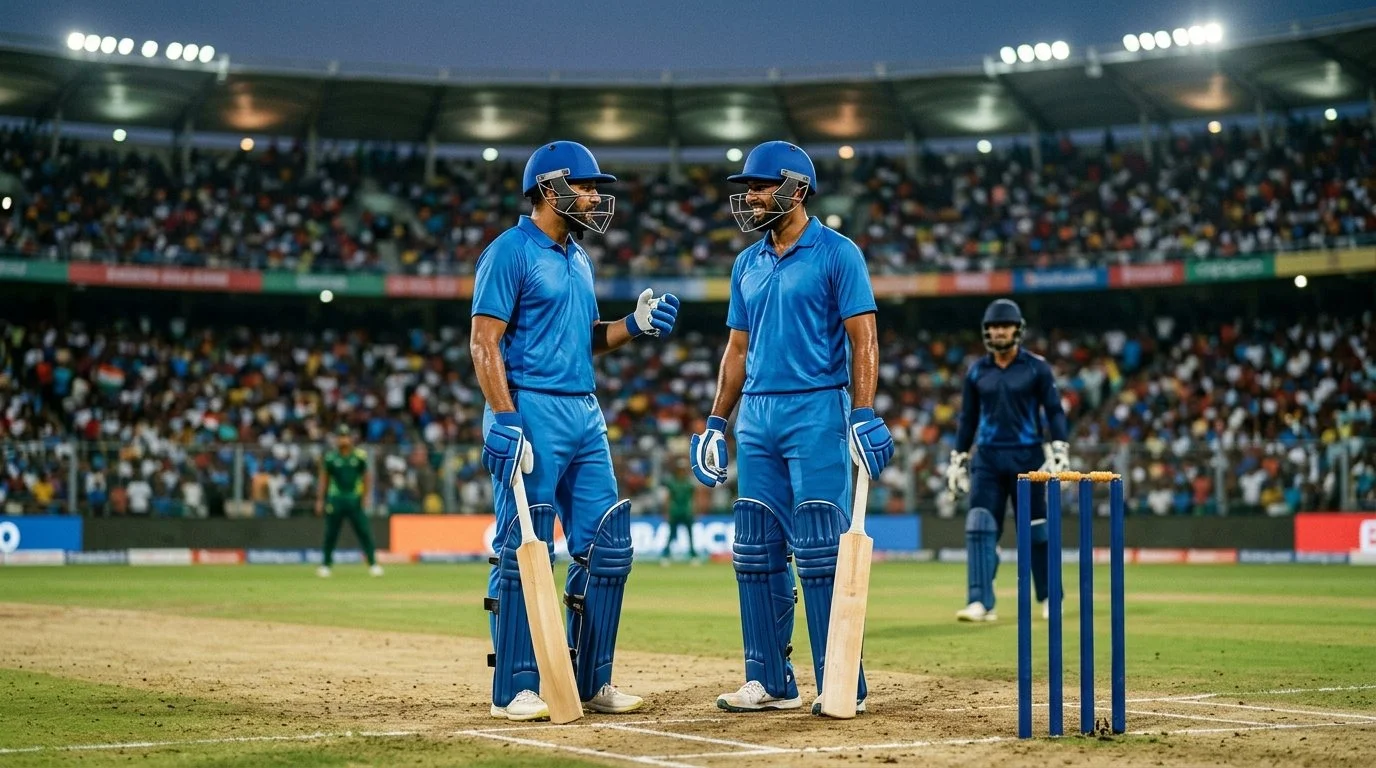
Two openers start at the crease, yet an opening-partnership total and each batter's individual score are different records. Extras, dismissals, strike changes and the end of the partnership can make the numbers diverge. That distinction matters when reading an IPL scorecard or considering a provider's partnership market.
This guide uses fictional examples. It does not predict a partnership, recommend a bet or claim that the site offers a particular market. Check local law, the operator's authorisation and the exact market terms; gambling can cause loss.
Also Read:BBL Betting: What Happens When the Innings Timer Runs Out?
The IPL Cricket ID page discusses IPL betting markets. It does not establish the terms or availability of a specific opening-partnership selection.
First establish what is being measured
A batter's score generally consists of runs credited to that player. Team runs also include extras. A partnership records the runs added while two batters are together, subject to the scorer's conventions and the circumstances of the innings. An operator may define its market differently, so its written rules must be checked separately.
Consider fictional openers A and B. A scores 12, B scores 9 and the team receives two wides while they are together. In a straightforward example, the team has added 23 runs during their partnership, although the two batters' individual scores add to 21. The remaining two runs are extras. Unusual penalty events and scoring provisions require the official record.
The IPL Cricket ID article discusses IPL betting markets. It is not an official scorecard or a guarantee of partnership-market availability.
Also Read:BBL Betting: The Overseas Signing Change That Makes Squad Depth Worth Watching
When does the opening partnership end?
In a simple case it ends when the first wicket falls. But retirement, an interruption, a shortened innings or other unusual events can raise additional scoring and settlement questions. The official scorecard records the cricket; a provider's terms specify how its own market handles an event.
Do not assume that a market is automatically void because one opener retires or the innings is interrupted. Do not assume the opposite either. Read the relevant wording before any lawful participation, and ask a verified provider if the definition is unclear.
Strike is not divided evenly
A partnership lasts across deliveries, not equal turns for each batter. Singles, threes and the end of an over can change which player faces. A wide can add to the team total without counting as a valid ball. The batters may also run byes or leg-byes when permitted, subject to the Laws.
A fictional partnership adds 40 runs. Opener A faces 25 balls and scores 28; opener B faces 10 balls and scores 10; extras add two. The partnership total is 40, but A had far more opportunity. The example is not a forecast of how any actual pair will divide the strike.
Why a wicket matters differently across markets
If the first wicket falls at 30, the opening partnership ends in the ordinary case, but the not-out opener can continue to score with the next batter. A partnership market and that opener's innings-runs market can therefore have different outcomes from the same wicket.
A run-out can end a partnership without a bowler receiving a wicket. Read the official mode of dismissal and any operator-specific settlement terms. A television graphic showing the team total may not explain which batter was dismissed or how the runs were credited.
Do not assume the openers from an old lineup
Teams can change batting order after selection. A named player may be promoted, while a listed opener may bat elsewhere. A substitute or replacement can also be subject to the current playing conditions. Check the official XI and actual opening pair, and read how the market treats a changed or non-participating player.
A strong previous partnership at another ground is context, not a guarantee. Conditions, bowling attacks and individual form vary. Small partnership samples are especially sensitive to one long stand or an early wicket.
The IPL Cricket ID article explains odds formats and margins. A fictional decimal price of 2.00 has a simple reciprocal of 50%, before margin; it does not prove the true probability is 50%.
Three fictional outcomes
An early wicket: The side is 8 for 1. The first partnership ends in the ordinary way, but the remaining opener may later make a large individual score.
A high-extra start: Both players score modestly, but several wides raise the partnership total. A team or partnership figure can exceed the sum of individual bat runs.
A quick chase: The openers reach a small target without separation. The match can finish before the full allocation of overs, and the provider's rules determine how any relevant market is settled.
These examples illustrate the distinction between records; they do not cover every possible scoring exception or operator rule.
Match-day questions
Who actually opens? Is the market for the first-wicket partnership, each batter's runs or the team total? Are extras included under the stated terms? What happens after retirement, no result or a changed player? Which official record does the provider use, and are later corrections recognised?
If the answer is unclear, obtain the provider's written terms or choose not to participate. Do not use a rumoured batting order as a confirmed selection.
The IPL Cricket ID page explains gambling risks. Set an affordable loss limit before any lawful betting, and do not chase losses or borrow to continue.
A ball-by-ball example
Imagine the first delivery is a dot ball to opener A. On the second, A hits a single. Opener B now faces and scores two. A wide follows, adding one team extra without counting as a valid ball. B then hits a four, followed by a dot and a single. The over still needs another valid ball; assume A takes one from it.
The side has scored ten runs: A has two, B has seven and the wide contributes one extra. The two batter scores add to nine, while the partnership has added ten in this simplified example. The over required seven deliveries because the wide did not count as a valid ball.
This example demonstrates the arithmetic, not a settlement rule. A provider might define a particular market by an official partnership record or its own stated source. Check the actual contract terms, especially for unusual penalties, interruptions or corrections.
When the pair changes before a wicket
A batter can leave the field for reasons other than a conventional dismissal. The Laws and official scorers determine how the innings and partnership are recorded. A market's treatment of retirement can depend on its own wording, and providers may differ. Ask whether the market requires a first wicket, a named pair or another event rather than treating these as synonyms.
If a batter is replaced under a competition's applicable conditions, the situation can become more complex. Do not infer a universal answer from a normal first-wicket example. Check the official playing conditions and the operator's current settlement rules.
A scorecard may be corrected after an initial display. Preserve the official record and the exact market wording if a question arises. A television overlay can be useful for following play but can be provisional.
The role of a pair
Two openers do not necessarily follow one fixed script. One may attack early while the other rotates strike; they may reverse roles when the bowling changes. A boundary can change the required rate, but a wicket can also bring in a new player with a different approach. The interaction is dynamic.
A left-right combination can require fielding adjustments, but it does not automatically outperform two players batting with the same hand. The quality of the bowlers, the field, the pitch and the players' skills matter. Avoid importing a percentage advantage from an unverified headline.
Do not assume that a team's best-known batter will face the majority of balls. A series of singles or a change at the end of an over can place the other batter on strike. Opportunity is a match event, not a permanent property of a player.
What a historical average can hide
Suppose a fictional pair has stands of 5, 12, 20, 30 and 133. Their average is 40, but four of the five stands are below that average. The outlying long partnership strongly affects the figure. A small sample is not a dependable prediction of the next start.
Check the competition, opponents, grounds and dates in any record. A pairing may have played together in another format or with different fielding restrictions. A new venue or changed batting order can further limit the comparison.
A median and a range can sometimes reveal more than an average alone, but none of them removes uncertainty. A price may already reflect widely known information, and the result can still differ sharply from the past.
Comparing three distinct selections
A first-partnership total concerns an interval involving both openers, under the market's definition. An individual-runs line concerns one batter's credited runs. A first-wicket method market, if offered, concerns the specified dismissal or event. These selections are related but not identical.
A wicket can end the partnership and still leave the surviving opener in a position to score many more runs. Extras can raise the partnership without raising either batter's score. A retirement or no result can introduce special settlement provisions. Read each market separately and do not assume that a shared match implies identical rules.
If selections are combined, their outcomes may be correlated. A long opening stand can affect the number of balls available to later batters and the team's total. Multiplying apparent probabilities as if every event were independent may misrepresent the relationship. A provider may restrict or price such combinations differently.
Who gets the next ball?
At the start of an over, one opener faces and the other is at the non-striker's end. A completed odd number of runs normally changes the ends the batters occupy; an even number normally leaves them at the same ends. At the end of the over the bowling end changes. The precise next striker follows the Laws and the actual sequence, including any dismissal.
This matters because a partnership is not a simple fifty-fifty division of deliveries. A player who takes a single near the end of an over may face again after the change of ends, while another sequence can leave the partner facing. A wide or no-ball adds further complexity because it is not normally a valid ball.
A fictional pair faces 36 valid balls before the first wicket. One player faces 24 and the other 12. Even if both have similar historical scoring rates, their opportunities in this partnership are different. The division was produced by play, not by a rule guaranteeing one player two-thirds of the deliveries.
Extras and attribution
Wides and no-balls are extras under the Laws. Byes and leg-byes are distinct categories subject to their own conditions. A team total can increase without every run being credited to a batter. A scorecard's extras breakdown explains the difference between the team score and the sum of individual batting runs.
For example, a fictional partnership contains 30 bat runs, three wides and two byes. In the ordinary simplified case, the team has added 35 runs while the pair were together. The batters' individual scores total 30. Penalty runs and unusual events can require additional scoring rules, so use the official record for a real match.
An operator's partnership market may specify its own definition and source. Confirm whether its wording refers to the official first-wicket partnership, a named pair or a different measure. If the terms do not explain a special event, request clarification before participating.
One wicket, several scorecard effects
If opener A is caught, the opening partnership ends in the ordinary case. Opener B remains not out and may continue with the next batter. The team has lost one wicket, while the bowler may receive credit if the dismissal qualifies under the Laws.
If opener A is run out, the partnership again normally ends with the wicket, but the bowler is not generally credited with a wicket. A team-wickets market and a bowler-wickets market can therefore differ. The partnership total itself is a separate number from either player's final score.
If a batter retires, an interruption occurs or an innings ends before a first wicket, use the official scorecard and the specific market terms. Do not force a simple caught-or-run-out example onto every possible event.
Comparing past opening pairs
A pair's record can be useful if the source states how many stands are included and in which competition. Averages derived from a few innings can be dominated by a single long partnership. A median, distribution or range may reveal that variation, but it still cannot determine the next result.
The context can change as well. One batter may move teams, the opening bowler may be different or a venue may use another pitch. A pair's past success against one attack is not automatically transferable to another. If a source does not identify the period or sample, treat its precision with caution.
Also verify that the same two people actually open the upcoming innings. A projected pair is not the final team sheet, and the final XI does not always guarantee the batting order. A changed opener can trigger a specific market rule that must be checked with the provider.
A short editorial exercise
Write two summaries of the same fictional innings. The first says: “The openers added 42 before the first wicket.” The second says: “Opener A made 18 and opener B made 21 during that stand; three runs were extras.” Both can be correct. One describes the partnership, while the other explains its components.
If opener B continues and finishes on 50, their final score contains runs made after the opening partnership ended. Adding 18 and 50 would not reconstruct the original 42-run stand. This is a common mistake when reading a final scorecard without the partnership details.
A careful report identifies the time period represented by each figure. A provider's market rules are then a separate question: they define the event and how an interruption, replacement or correction is handled. Neither a high past average nor a well-known opening pair guarantees a future stand.
Keep the scorecard and bet record separate
A cricket scorecard describes runs and wickets in the match. A bet confirmation describes an accepted selection, price and stake under a provider's terms. A partnership figure can be corrected on the official scorecard without the initial display having been fraudulent; the operator's rules determine how that correction affects settlement.
If a dispute arises, retain the relevant market wording, the accepted confirmation and the official record. Ask for an explanation through an independently verified channel. Do not publish account identifiers or share a password, OTP or payment PIN with someone offering to resolve the issue.
Confirm the right innings
An IPL match has two innings, and the opening pair in one belongs to one team only. Before interpreting a market, confirm which team and innings it covers. A score displayed during the chase does not describe the first innings’ opening stand. If the market names players, verify the actual pair and the provider’s rules for a changed opener.
For an interrupted innings, preserve the official partnership record and the applicable terms. The fact that a match has an official winner does not automatically settle every player or partnership market in the same way.
Official Regulatory & Industry References
Mahadev Book adheres to industry compliance, fair play principles, and statutory regulatory standards: