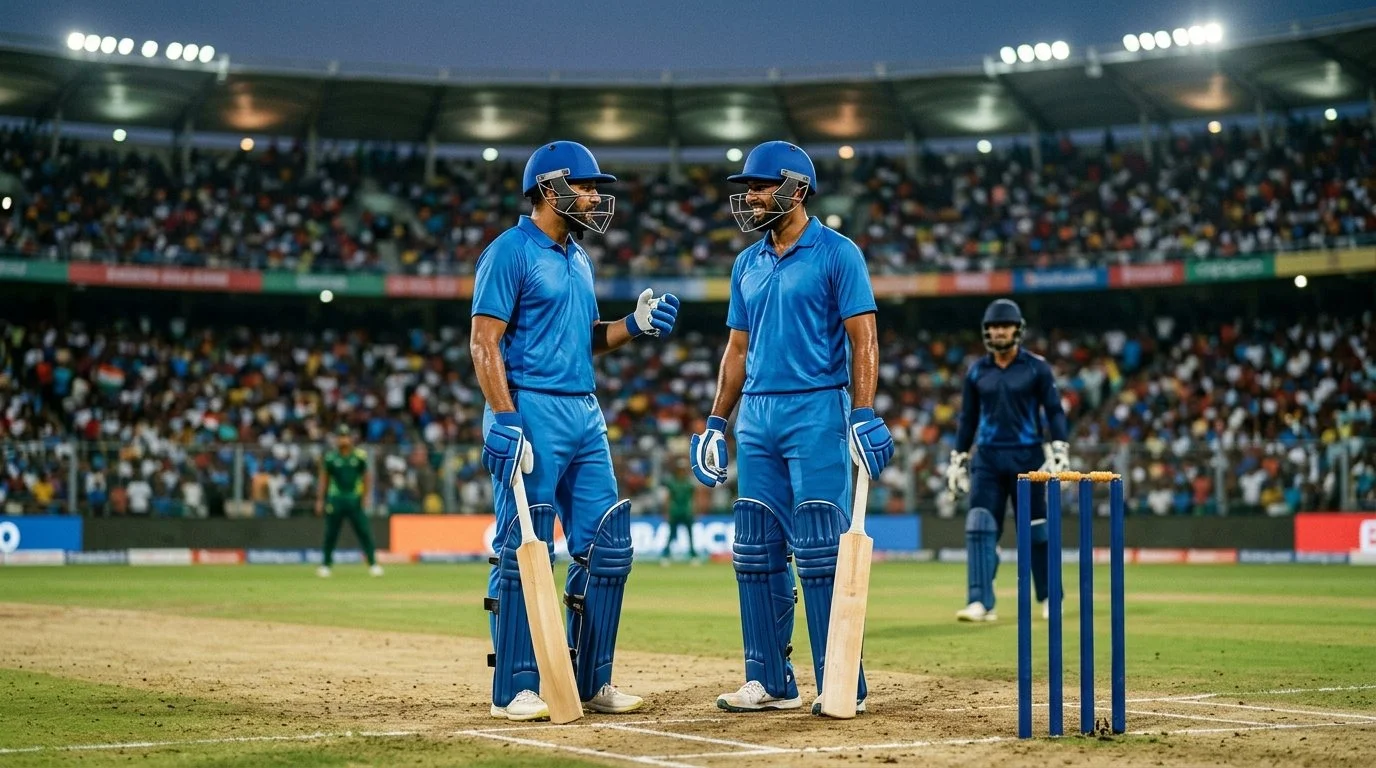
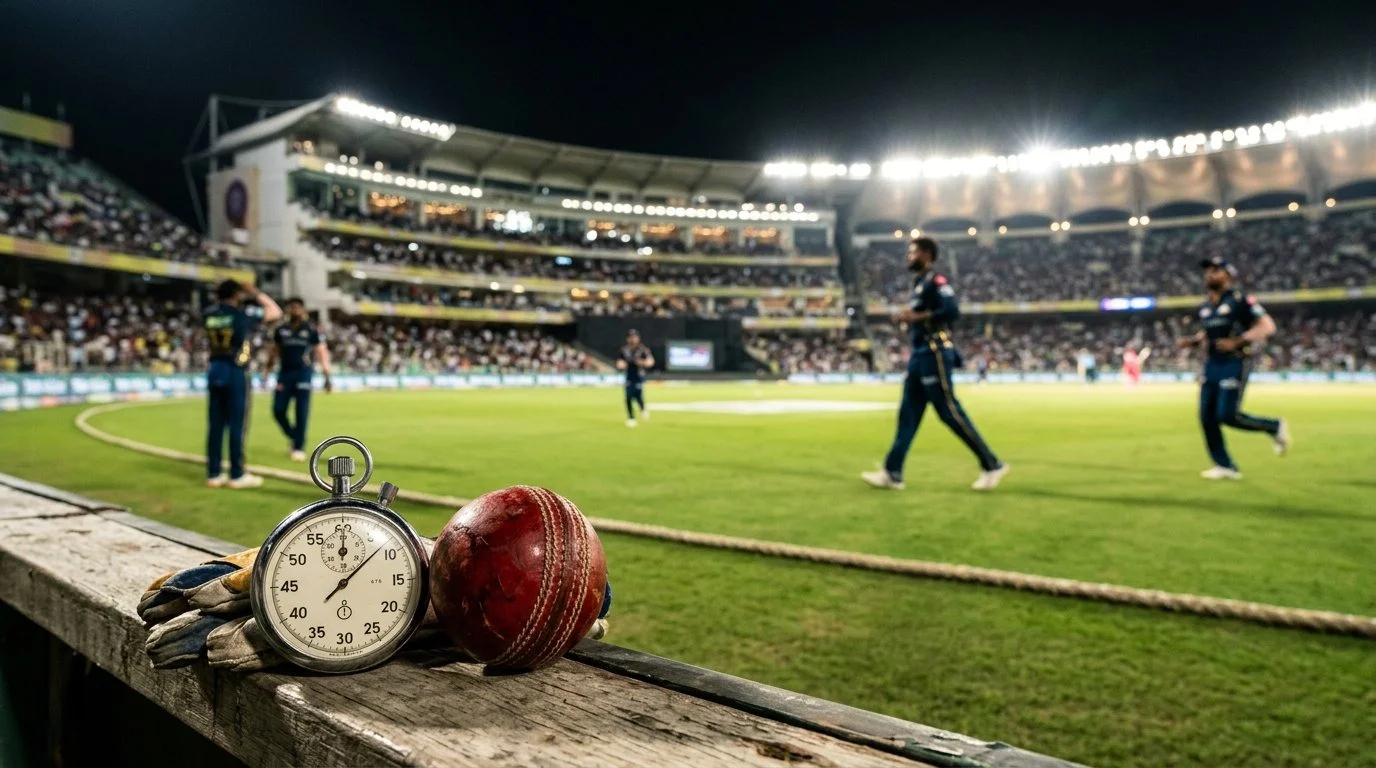
A fielding team is behind the clock and still has deliveries to bowl. Under a change announced for the upcoming Big Bash season, that can lead to stricter fielding restrictions for the rest of the innings. The change is worth understanding, but a restricted field does not guarantee boundaries or a high total.
This guide describes Cricket Australia's announcement and uses fictional examples. Check the final competition playing conditions and official match information, particularly for interruptions or shortened games. It is not a betting recommendation.
Also Read:BBL Betting: The Overseas Signing Change That Makes Squad Depth Worth Watching
The BBL Betting page discusses BBL betting markets. It is not the official playing-conditions document or a guarantee that any market is available.
The announced timer change
Cricket Australia reported that in a full men's BBL innings, the countdown timer allows 84 minutes to complete 20 overs. Under the announced change, when the timer expires—even in the middle of an over—full powerplay fielding restrictions apply from the next ball for the remainder of the innings. Only two fielders may be outside the fielding restriction circle during that penalty period.
The announcement gave a different full-innings time for the women's competition. Do not apply the men's number to every competition. Allowances, interruptions and shortened matches depend on the applicable playing conditions and officials' management of the timer.
The BBL Betting article compares cricket-league odds. It is not an official timer or a statement that a breach has occurred in a particular game.
Also Read:IPL Betting: Why the Final Overs Are More Than a Boundary Count
Not the same as the Power Surge
The batting side chooses when to take its two-over Power Surge under the relevant BBL conditions. The over-rate consequence is triggered by the innings timer and applies according to the officials' enforcement. Both can restrict deep fielders, but their causes and duration are different.
The opening powerplay is a third concept: a scheduled early-innings field restriction. Avoid calling every late-innings restriction a Power Surge. Check the official match display and the umpire's actions, rather than assuming the batting captain selected a surge.
A fictional mid-over example
In a fictional full innings, the fielding side is partway through an over when the official timer expires. Under the announced rule, full powerplay conditions apply from the next ball for the remainder of that innings. The captain must adjust the field in accordance with the officials' directions.
That does not mean the next ball must be hit for four. A batter may take a single, miss the ball or be dismissed. The bowler's execution, the batter's decision and field placement still matter. The rule changes available field positions, not the certainty of a scoring outcome.
Why the clock is not always the wall clock
An innings timer can be managed under the playing conditions to account for specified interruptions or allowances. A television countdown may be delayed, incomplete or updated after an official decision. Do not calculate a breach by simply subtracting the innings start time from the current time on your phone.
If rain reduces the innings, consult the current reduced-match provisions. A general full-innings number cannot establish the deadline for every shortened game. Officials administer the match and the applicable timer.
Compare the old and new descriptions
Cricket Australia's announcement described the newer approach as a simplification of an earlier two-stage system. An older article may say that one extra fielder first came inside the circle and a later timer triggered fuller restrictions. That historical description should not be assumed to govern the upcoming season.
Similarly, a rule used in an international T20 match may differ from the BBL's conditions. Check the competition and season before applying an over-rate penalty from another tournament.
What a market may and may not measure
A named-over runs market, an innings total and a market on a specific delivery are different events. Even if a fielding restriction is applied, each market's settlement depends on its own definition, accepted price and terms. Some markets may not exist; this article does not assert availability on the site.
Ask whether extras are included, what happens after an interruption or incomplete over, which source the operator uses and how score corrections are treated. The cricket rule does not automatically decide the operator's private settlement terms.
The BBL Betting guide explains odds formats and margins. A displayed price reflects an offer, not proof that a penalty has been applied or that a result is certain.
A fielding decision after a breach
With fewer permitted deep fielders, the captain must choose which boundary areas to protect. The batter and bowler can adjust their plans. A mistimed shot can produce a catch, while an accurate delivery can limit scoring. The consequence creates a tactical constraint; it does not decide the innings.
If the timer expires late, only a small number of balls may remain. If it expires earlier, the potential effect can cover more deliveries. The exact number must be established from the official match sequence, not guessed from a short clip.
Responsible reading
The BBL Betting risk guide discusses responsible gambling. If betting is lawful and age-appropriate where you are, set an affordable limit in advance, avoid chasing losses and never use essential funds. Choosing not to bet is always valid.
What the penalty changes on the field
A captain normally chooses field positions within the applicable phase restrictions. Under the announced timer consequence, full powerplay restrictions apply from the next ball after the timer expires and remain for the innings. With only two fielders permitted outside the restriction circle, the captain must select which areas to protect and which remain more exposed.
That is not the same as removing a player from the field. The fielding side still has its players, but their permitted positions are restricted. The captain can move fielders and adjust the bowling plan within the rules. A ball hit toward one of the protected areas may still be caught or stopped.
The batting side also has choices. A set batter may attack an open area, seek a single or try to retain strike. A new batter may need time to settle. The fielding restriction does not determine which choice succeeds.
Distinguish three restrictions
The opening powerplay is scheduled at the beginning of a full BBL innings under the relevant conditions. The Power Surge is a two-over period chosen by the batting side within the permitted window. The over-rate consequence is applied after the official timer expires under the announced playing condition.
All three can involve a limit of two fielders outside the circle, but they have different triggers and durations. A match display that says “powerplay” may require additional context to identify which rule is in operation. Follow the officials and official match information.
If a timer breach and a chosen surge appear close together, do not infer how overlapping provisions interact from this short guide. Consult the current detailed playing conditions and the umpires' implementation for the actual match.
A fictional end-of-innings sequence
A team has ten legal balls left when the timer expires during an over. Under the announced full-innings framework, the restriction applies from the next ball for the remainder of the innings. A boundary is hit, a single follows and then a wicket falls. The fielding restriction remains relevant, but it did not prevent the wicket.
Now imagine the innings instead ends two balls after the timer expires. The restriction affected far fewer deliveries. A headline that says “timer penalty applied” does not by itself establish how long it lasted or how many runs it changed.
These examples assume the officials have established the breach and applicable conditions. They do not specify how a reduced innings or time allowance is calculated. The current official rules govern those details.
Timer allowances and display delay
Some interruptions and delays may be treated under the playing conditions rather than simply counted against the bowling side. The umpires administer the match and any permitted adjustments. A person watching a broadcast may not see all of the information used for that decision.
A streaming feed can also lag the ground. A displayed countdown may be behind the official timer, and a score overlay can be corrected. Do not use a screen alone to conclude that a team has breached the time limit or that an operator has accepted a bet at a particular price.
A provider may suspend or reprice a live market. The displayed quote before suspension is not necessarily an accepted transaction. Check any confirmation and the specific rules. If the screen is confusing or the terms are unclear, stepping away is a valid choice.
What to record after a real incident
Note the match and innings, the official confirmation of a breach, the ball from which the restriction applied and the number of deliveries remaining. Record the final score and the official outcome. If a team appealed or the timer was adjusted, include that context only when supported by a reliable source.
Do not calculate the penalty from a video timestamp without knowing the official allowances. Do not attribute every subsequent run to the restriction: the quality of bowling, fielding and batting also matters. A single incident cannot establish how much a rule will change scoring across a season.
A careful article distinguishes the published rule from its effect in a specific match. The first comes from the applicable playing conditions; the second requires the actual sequence and still involves uncertainty about what would otherwise have happened.
Why the timer can expire during an over
Cricket Australia's explanation says the consequence can begin even if the countdown reaches zero partway through an over. The relevant restriction applies from the next ball, not only after the over has ended. The officials' timing and directions matter more than a viewer's rough estimate from the broadcast.
Imagine an over with two legal balls completed when the official timer expires. Under the announced full-innings rule, the fielding side must comply with full powerplay restrictions from the next ball for the rest of the innings. A wide or no-ball can affect the number of deliveries still to be bowled, but the fielding restriction concerns the remaining balls under the officials' application of the conditions.
A viewer should not assume that the countdown shown on a streaming screen is perfectly synchronised with the ground. An official adjustment for an eligible interruption may also be relevant. Consult the current conditions and the match officials' record.
The old two-stage system
Cricket Australia described the previous approach as involving two penalties and two countdown timers. One stage required an additional fielder inside the circle; a later stage could impose full powerplay conditions. The new announcement says the first timer expiry triggers the stronger restriction for the remainder of the innings.
An older article may therefore be accurate for the season it covered while wrong for the upcoming conditions. Check its date and competition. Do not describe the old two-stage arrangement as though it were automatically current, or apply the new BBL rule to an international match with different conditions.
Rules can be amended, so confirm the final competition document before publication. A summary of an announcement cannot replace every clause on allowances, interruptions and reduced innings.
The effect on a bowler's plan
A captain with only two deep fielders may choose which areas to protect based on the batter and the bowler's intended line. The bowler may attempt a delivery that limits the batter's access to an open area, but execution is uncertain. An accurate ball can produce a dot or wicket; a missed length can be hit for runs.
A batter can also misjudge an attempted shot. Full powerplay restrictions do not make catches impossible. In a fictional sequence, the batter hits one boundary into an unprotected area and is caught on the next delivery by a deep fielder. Both events are compatible with the same restriction.
The score after the restriction reflects the whole sequence, including extras and wickets. It cannot establish exactly what would have happened under a different field. Avoid claiming that a breach caused a fixed number of additional runs.
Market definitions after a breach
An innings-total market may cover the full innings, while an over-runs market covers a stated period. A ball-by-ball market is narrower still. The fact that the field changed can be relevant context, but each event has its own terms and uncertainty.
Check how the provider treats wides, no-balls, penalty runs, interruptions and a match that finishes before the stated period is complete. If the operator uses a specified official data source, read how corrections are handled. A fielding restriction under cricket rules does not automatically answer a betting settlement question.
A suspended quote is not a confirmed bet. Keep any accepted confirmation and avoid making repeated requests because a screen appears slow. Never send a PIN, password or one-time code to a caller claiming to resolve a market issue.
Comparing incidents across matches
Record the number of deliveries affected rather than only whether a breach occurred. A penalty applied for two balls and one applied for several overs are not equivalent. Also note wickets in hand, batters and bowlers involved, ground and whether the innings was reduced.
Even a collection of incidents may be too small to estimate a stable effect. Teams that breach the clock might have faced unusual delays or difficult match situations. Other factors can influence scoring, and a correlation is not proof that the restriction alone caused a result.
A responsible match report can state the rule, the time or ball of the officials' decision and the final score. If the official information is unavailable, say so. The rule creates an important tactical consideration, not a reliable prediction of boundaries or profit.
The last check before describing a breach
Identify the competition, the innings and the current version of its playing conditions. Verify that the timer reached its official limit after any permitted adjustments, and identify the next ball from which the umpires applied the restriction. A delayed television countdown is not a substitute for that information.
If the innings is reduced, do not assume the full-innings 84-minute figure applies unchanged. Consult the relevant adjustment provisions. If the match is abandoned or an over is incomplete, the official result and any provider's settlement are separate questions.
A reader can understand the new rule without placing a bet. If gambling is legal and age-appropriate in the reader's location, a pre-set affordable limit and a willingness to stop are more useful than trying to predict a guaranteed boundary.
What the countdown does not show
The countdown alone is not a forecast of the innings total. It does not show whether the next batter will take a single, be dismissed or hit a boundary. It also does not necessarily explain an official time adjustment. Treat the clock as one piece of match information and confirm any restriction with the officials' record.
Separate the restriction from the final score
The number of runs scored after a timer breach is observable in the official scorecard. The number that would have been scored without the breach is not directly observable. A careful report can describe the actual fielding restriction and subsequent sequence without claiming a precise causal effect.
If the officials adjust the timer for an eligible delay, a spectator’s elapsed wall-clock calculation may differ from the official decision. Check the playing conditions and the match record rather than declaring a breach from the video alone.
Official Regulatory & Industry References
Mahadev Book adheres to industry compliance, fair play principles, and statutory regulatory standards: