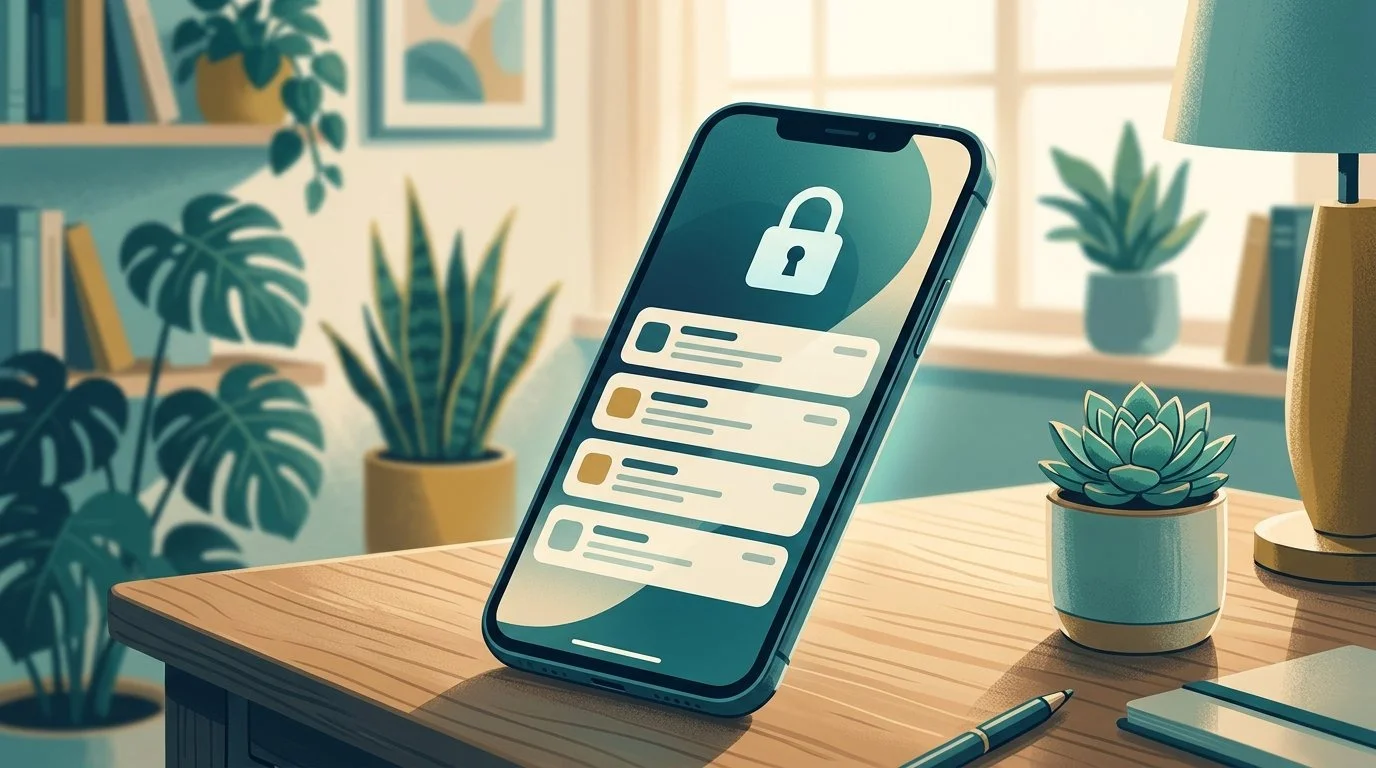
A phone can announce a new message while locked—and display part of its contents to anyone nearby. The alert may contain a name, account detail or one-time code. Hiding notification previews can reduce what appears on the lock screen, but it does not stop the message being delivered or protect a device that someone can unlock.
This guide explains general device-level choices. It does not claim that a particular app exists, sends a particular notification or offers these settings. Menu names and features vary by operating system and version.
Also Read:Navigating India Bet Scams: Warning Signs Before You Deposit
The Mahadev App page provides app-related information. Independently verify any app's publisher and source; a website or logo does not establish safety or authorisation.
Separate the alert from its preview
A notification can have several parts: an icon or app name, a short title, a message preview and a sound or vibration. Some devices allow you to show that an alert arrived while hiding sensitive content until the phone is unlocked. Others allow notifications to be hidden from the lock screen entirely.
The choice involves a trade-off. Hiding previews can improve privacy in shared spaces, but it can also mean you need to unlock the device to understand an alert. Turning off all alerts may cause you to miss something time-sensitive. Choose a setting that fits the actual app and your needs.
A Mahadev Book Login information page concerns sign-in, not a device's notification controls. An alert claiming to be about a login is not proof that its sender is genuine.
Also Read:Bets Exchange vs Matchbook vs Betfair: A Feature Face-Off
Android: find the lock-screen setting
On many Android devices, open Settings and look under Notifications for lock-screen notification options. Depending on the device, you may be able to hide sensitive content, show alerts without details or hide lock-screen notifications. The exact names and available choices vary by manufacturer and version.
You may also be able to review notifications for a particular app or category under Settings and Apps. Change one setting at a time, then test it with a harmless notification. Do not use a real banking code or expose a private message merely to test the screen.
If a work profile is managed by an employer, it may have separate notification settings or policies. Do not change settings you are not authorised to manage.
iPhone: review preview options
On iPhone, notification settings can include options controlling when previews appear, such as always, when unlocked or never, depending on the current system. Open Settings, review Notifications and the relevant app, and consult Apple's current guidance if the menu differs.
Changing a preview setting is not the same as disabling the app, closing an account or deleting messages. It changes what appears in a particular display context. A person who can unlock the phone may still see the notification or its contents.
A Mahadev Book Registration page about registration does not establish how your phone handles lock-screen previews. Use your device's own settings and documentation.
Choose between three levels
Show content: convenient, but names or message text may be visible while the device is locked.
Hide previews: an alert may still appear, but the device can withhold some content until unlock, depending on the settings and app.
Hide lock-screen notifications: reduces visible alerts on the locked screen, but you may need to check the notification centre or app after unlocking.
These are general descriptions, not guarantees for every device. Test your actual setting and check any exceptions, such as apps with separate notification categories.
One-time codes deserve extra care
A code displayed on a lock screen can be seen by someone with physical access to the device. Hide previews if appropriate, use a strong device lock and do not share the code with a caller or support contact. A code may authorise an action; it is not a routine identifier to send in a chat.
If a code arrives for an action you did not initiate, do not share it or approve an unexpected request. Verify the account through a trusted route you open yourself. Repeated unexpected prompts can be a reason to review account security, but they do not by themselves prove a successful sign-in.
The Mahadevbook Signup page concerns account creation. It cannot verify an unsolicited code or prove that the sender is genuine.
Test without exposing real information
Ask a trusted person to send a harmless test message, or use a non-sensitive reminder. Lock the phone and observe what appears. Then unlock it and check whether you can still find the alert. If you use a wearable or another connected device, check whether that device also displays previews.
Repeat the test after changing a system setting or an app-specific category. Do not assume that a setting applied to one app automatically covers every app or connected screen. Some device configurations can behave differently.
The Mahadev Book ID Login page concerns an account identifier, not your phone's local privacy settings.
What if a notification looks suspicious?
Do not tap a link or call a number solely because it appears in an alert. Open the relevant bank, email or service through an independently verified route. A notification can be generated by an app, a browser permission or a message; its visual style does not prove the sender's identity.
If a payment is unfamiliar, contact the bank or payment provider promptly. Do not disclose a UPI PIN, password, card security code or OTP to anyone who offers to resolve it.
The Mahadev Book Deposit transaction guide cannot verify an individual alert or guarantee a payment outcome.
A quick privacy review
Check the device lock, system preview setting, app-specific notification categories and connected devices. Decide which alerts you need and which information can remain hidden until unlock. Test with a harmless message, and revisit settings after major device changes.
A preview can reveal more than the message body
A lock-screen alert may show the app name, sender, time and a short message even when part of its content is hidden. Some applications put information in the notification title rather than the body. A general device setting may not treat every title or category in the same way.
Test the actual behaviour with a harmless message. Lock the phone, observe what is visible and then unlock it to see what information becomes available. If the app groups notifications, expand or open the group only when it is safe to do so. The exact controls depend on the device and operating-system version.
If you want no indication of a sensitive app on the locked screen, hiding message text alone may not be enough. Review whether the app name or icon remains visible. A stronger setting may hide its lock-screen alerts entirely, but that can affect timely awareness.
Connected devices can repeat the same alert
A smartwatch, tablet or computer may mirror notifications from a phone. Changing the phone's lock-screen setting does not necessarily change every connected device's display. Check the wearable or computer's own privacy and notification settings using its official documentation.
Consider who can see the device when it is on a desk or being charged. A watch may show a preview when worn and unlocked, while a shared tablet may display the same alert to other household members. The exact behaviour depends on pairing, lock state and settings.
Do not use a real one-time code as a test message. A harmless reminder or a message without personal information can reveal whether a preview is visible without exposing an authentication secret.
Browser notifications are another source
A web browser may be allowed to show notifications from individual sites. These are separate from a message sent by a phone app. Review the browser's site-notification permissions if unexpected alerts appear. The menu varies by browser; remove permission for sites you do not recognise or no longer need.
A browser notification can imitate a system warning or claim that an account needs urgent action. Its presence on the lock screen does not verify the site or sender. Do not call a number or install software because of the alert; navigate independently to the relevant service and verify the claim.
Turning off browser notifications does not delete the site's account or stop other communication channels. Ask the provider about email or marketing preferences separately if needed.
Lock-screen privacy and accessibility
Some users rely on spoken notifications, large text or wearable alerts. Hiding every notification may make important information harder to access. Test whether the device's privacy setting still allows you to receive an accessible cue and review the message after unlocking.
If you ask a trusted person to help adjust settings, you can describe the menu without revealing an OTP or password. Avoid granting remote control to an unsolicited helper. Device-level settings should be changed by the owner or someone they knowingly authorise.
The goal is not silence for its own sake. Choose which information can be visible, which alerts remain useful and how you will verify an unexpected request. Review the choice after a device update or when your circumstances change.
Why “hide previews” should be tested
A setting name can sound more comprehensive than the actual behaviour. An alert might hide its body but still show an app name, sender or category. A notification group may reveal additional information when expanded. The exact display depends on the device, operating system and app.
Use a harmless test and check the locked screen from the perspective of someone who does not know your passcode. Then unlock the device and make sure you can still find the notification. If the app has multiple notification categories, test the categories you actually use.
A test demonstrates the current configuration, not a permanent guarantee. Repeat it after a major operating-system update, a new wearable connection or an app setting change. Keep the device's lock method and recovery settings current using the manufacturer's guidance.
Different people need different alerts
Someone may need timely health, accessibility or family notifications while preferring to hide account-related previews. A blanket “turn everything off” instruction can create a different problem. Review app-specific and category-specific controls where available, and keep important alerts accessible.
If spoken feedback is enabled, check whether a notification can be read aloud in a public place. Headphones, preview settings or a different alert style may help, depending on the device. Test with non-sensitive content before relying on a configuration.
A notification can be useful without revealing the entire message. The right balance is a personal choice informed by the actual device options, not a claim that one setting works for everyone.
Avoid confusing local settings with provider preferences
A device can silence or hide an alert while the provider continues to send the underlying message. An email marketing preference, an in-app preference and a phone's lock-screen preview are separate controls. If you want promotional messages to stop, review the verified provider's preferences and the applicable law as well as the device settings.
Do not click an unsubscribe link in a suspicious message simply to make it disappear. A forged message can use that link to confirm an address or lead to a malicious page. Open the provider's known route yourself and check whether the preference is available there.
If you receive an unexpected security alert, hiding its preview does not mean it should be ignored. Open the account independently and verify the event. Do not share an authentication code or approve a request you did not initiate.
What a lock screen does not protect
A person who can unlock the device may be able to read messages and change notification settings. A weak passcode, an unlocked device left unattended or an authorised user with access can defeat the privacy benefit of hiding a preview. Review who can unlock the device and whether connected devices show the same information.
A hidden preview also does not delete the message, revoke an account session or erase a file already stored elsewhere. Each action requires its own process. If a notification indicates suspected financial fraud, contact the bank or payment provider promptly through an independently verified route.
A practical test plan
Choose a non-sensitive message. Send it to the device, lock the screen and observe the icon, title, sender and preview. Check any paired wearable. Unlock the device and confirm that the alert remains accessible in the way you need. If the result differs from your expectation, adjust one setting and repeat the test.
Record only the settings you changed; there is no need to save or share a screenshot containing a real code. A small, repeatable test is more reliable than assuming a setting's name describes every detail.
Balance privacy with important warnings
Some security or financial notifications can alert you to an event you need to investigate. Hiding the preview does not have to mean ignoring the alert: you may be able to display an icon or a generic notice and review the details after unlocking. Test the available options on your actual device.
If you disable a category entirely, consider how you will check for important messages through a verified app or account. A separate reminder to review an inbox can help, but it is not a substitute for an emergency alert. Device and app options differ, so choose a configuration that works for your needs.
When more than one person uses a device
A shared tablet may display notifications belonging to a particular profile. Check whether the device supports separate user profiles and whether notification settings are profile-specific. Do not inspect or alter another person's messages. If you cannot keep sensitive alerts private on a shared device, use a device you control or avoid signing in.
For a phone visible to family or colleagues, consider both the locked state and the period immediately after unlocking. A preview that appears automatically when the owner looks at the device may be visible to nearby people. Position and physical access still matter even when a privacy setting is enabled.
A final check for suspicious content
A lock-screen notification can contain a link, a telephone number or an urgent claim. Treat these as unverified until you check through a route you opened independently. A genuine-looking icon does not prove that the sender is the bank, account provider or device manufacturer.
If the message asks for a password, OTP or UPI PIN, do not provide it. If it reports an unfamiliar payment, open your bank's verified app or contact the bank using independently obtained details. Keep a record of the alert if useful, but do not post the code or private account information publicly.
A preview setting is only one part of a device privacy plan. Review the device lock, paired screens and any browser notification permissions as separate controls. If a setting is managed by an employer or belongs to another user, follow the relevant policy rather than changing it without authorisation. A harmless test message is preferable to exposing a real verification code during a demonstration.
Official Regulatory & Industry References
Mahadev Book adheres to industry compliance, fair play principles, and statutory regulatory standards: