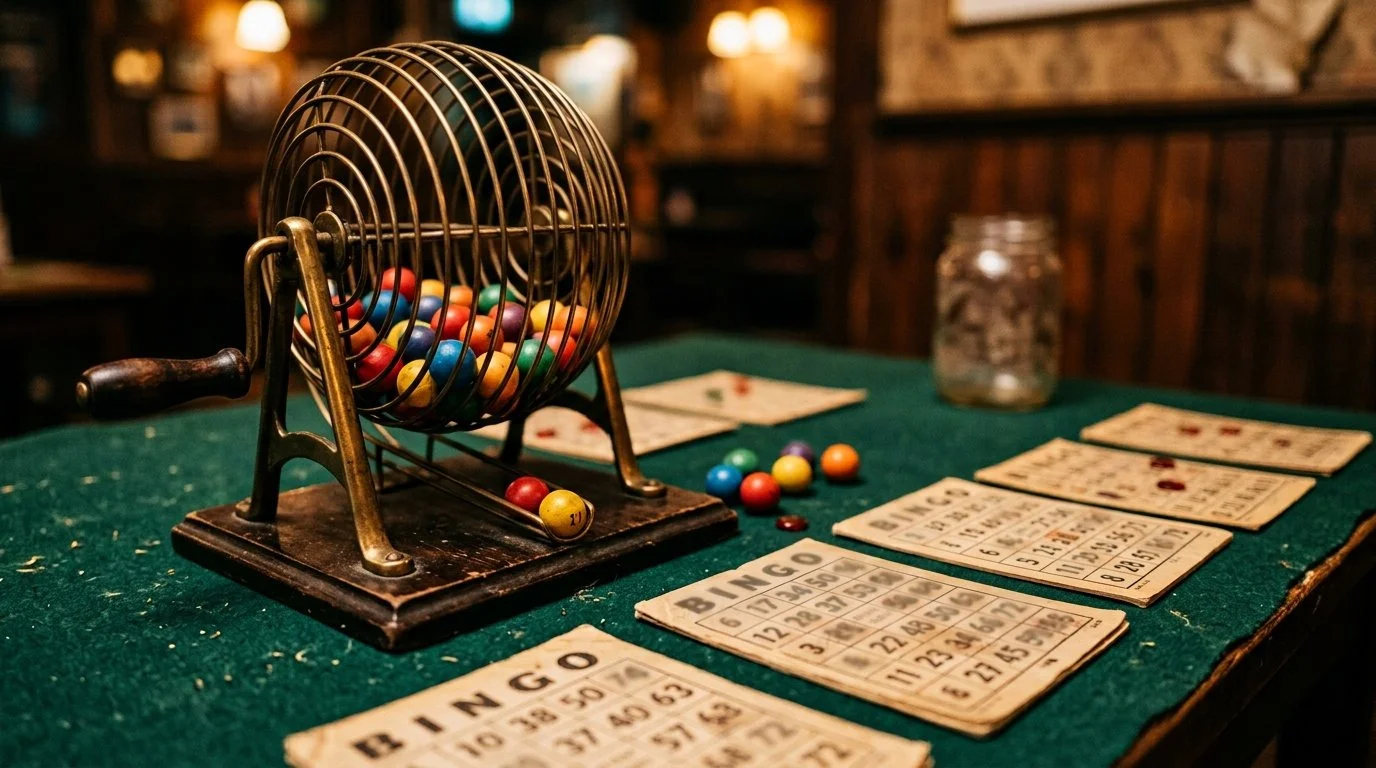
A number is called, players check their cards and someone needs just one more square to complete a pattern. Bingo is easy to recognise, but a new player may still have questions: How many numbers are on a card? What counts as a win? Are every card and prize structured in the same way? And does buying more cards guarantee a return?
The short answer is that bingo formats vary. A particular room might use 75 or 90 numbers, different card layouts, different winning patterns and different prize rules. The only reliable guide for a specific game is its published rules. This article explains common formats and the questions to ask before participating; it does not claim that a named game is available or that a player can predict the next call.
Also Read:Tennis Tie-Breaks and Retirements Explained: The Rules Behind a Confusing Scoreline
For the wider website, start at Mahadev Book. Access to gambling products depends on local law, age requirements, operator terms and actual availability.
Bingo in one minute
Players receive or select cards containing numbers. Numbers are drawn or otherwise selected at random under the game’s rules, and players mark matching numbers. A winner completes the specified pattern and makes a valid claim where required. The game ends according to its published conditions.
That summary leaves important details open. A game can require a straight line, a full card or another announced pattern. Some digital games mark numbers automatically, while others require a player to act. Prize arrangements may depend on the number of participants or may be stated in advance. Before starting, confirm the rules for that exact room.
The UK Gambling Commission describes bingo as an equal-chance game within its regulatory framework, with participation and a defined endpoint. That is a UK regulatory description, not proof that a particular site is licensed there or that rules in another country are the same.
Also Read:Ninety Minutes or the Whole Match? Football Extra Time, Penalties and Qualification Explained
The site’s bingo game page introduces its bingo category. Its existence is not independent evidence of a particular format, active room, payout or licence.
How a card, a call and a winning claim fit together
A card or ticket displays the numbers assigned for a game. The layout depends on the format. A player might have one ticket or several; a specific room may set a maximum. The card does not control which number will be called.
A call is the announcement of a selected number. In a physical game, a caller may announce a ball drawn from equipment. In a digital game, the interface can display a number generated by the game’s system. The selection method and testing requirements are governed by the relevant rules and jurisdiction.
A pattern defines what must be marked to qualify for a prize. It could be a line, two lines, a full card or another arrangement. The required pattern must be checked before the game starts. A nearly complete card is not a win unless the published rules award a prize for that state.
A claim is how a player asserts a win where the game requires it. A physical hall may require the player to call out; a digital game may automate marking and claim handling or require a button. Check any time limit, verification process and rule for simultaneous winners.
The 90-ball format: three rows and different milestones
A common 90-ball ticket has three rows and nine columns. Each row contains five numbers and four blank spaces, giving fifteen numbers in total. Across a typical ticket, the columns are organised by number ranges. Ticket designs and strip arrangements can vary, so inspect the card and the game rules rather than assuming every interface looks identical.
A 90-ball game can offer a prize for completing one horizontal line, another for two lines and another for a full house, where all fifteen numbers on a ticket have been called. That is a common structure, not a promise that every room offers all three prizes. Some games use different stages or prize allocations.
Imagine a ticket has five numbers in its top row. As calls are made, four appear and one remains. The ticket is one number away from that line, but another player may complete a valid line first. If the game continues to later prize stages, the rules should explain which tickets remain eligible and how a tie is handled.
A card with a number left is not “due” to win. The remaining number may be called next, much later or after another ticket completes the pattern. A random draw without replacement changes the pool as numbers are called, but it does not make an uncalled number guaranteed to arrive before a competitor wins.
The 75-ball format: a five-by-five grid
A common 75-ball card is arranged in a five-by-five grid. The columns are often labelled B, I, N, G and O, with numbers drawn from ranges associated with each column. The centre square is frequently a free space, leaving twenty-four numbered squares, but a particular game can use its own layout and rules.
The pattern can vary more visibly than a simple line. A room might specify a row, a column, a diagonal, four corners or a different announced shape. It may also offer a full-card objective. The player should check the pattern shown for that particular round rather than assuming that any completed line wins.
Suppose a game requires a vertical line. A player marking five squares across a row has not met that condition merely because those squares form a line. If the game uses a centre free space, the player should also confirm how it contributes to the announced pattern. The interface’s rules determine the valid claim.
In a shared-prize game, simultaneous winners may divide a prize or be treated according to another published procedure. A full house or pattern completed on the same call as another card is therefore not automatically worth the entire advertised amount to each winner.
Comparing common formats without choosing for the reader
|
Feature |
Common 90-ball example |
Common 75-ball example |
|
Number pool |
1 through 90 |
1 through 75 |
|
Typical layout |
Three rows, nine columns and fifteen numbers |
Five-by-five grid, often with a free centre |
|
Possible goal |
One line, two lines or full house |
Announced pattern or full card |
|
Marking |
Manual or automatic, depending on the room |
Manual or automatic, depending on the room |
|
Prize |
Defined by the particular game |
Defined by the particular game |
The table is a broad orientation, not a universal rulebook. Before a round, check the card, pattern, participation requirement, prize allocation and claim deadline. A different layout is not automatically an error, but it should be explained by the game’s rules.
What determines the chance of winning?
The odds depend on the game design: the number of cards, how they are constructed, the pattern, the draw procedure and the number of eligible competing tickets. Buying more cards may increase the number of chances you hold, but it also increases the cost. It does not ensure that a prize will exceed the total amount spent.
In a simplified equal-chance example with 100 equally likely, distinct tickets and one prize, one ticket has a one-in-100 chance of winning. Ten tickets would collectively represent ten of those 100 chances, or 10%, assuming the game’s structure makes every ticket equally likely and no other complication applies. This is a teaching example, not a calculation for every bingo pattern or actual room.
Real bingo can have ties, multiple prizes, different card designs and conditions that complicate a simple ticket-count model. If prizes are shared, the amount received by a winning ticket can vary. If players buy different numbers of cards, each person’s chance is not necessarily the same even if each individual card is treated equally.
Do not treat a prize headline as expected profit. Compare the total cost of all tickets with the actual prize conditions, including any fee or split. You may win less than you spend or win nothing. A long sequence of losing rounds does not create an obligation for the next round to pay you back.
Random draws and the “due number” myth
In a fair draw without replacement, a number that has already been called is removed from that game’s remaining pool. Among the uncalled numbers, the next call should follow the game’s random-selection rules. The fact that a number has not appeared for many calls does not by itself make it specially favoured over other uncalled numbers in the same pool.
A fresh round is also not a continuation of the previous one unless the rules expressly say so. A number absent from the last game is not automatically more likely to appear early in the next. Similarly, a card that lost several rounds is not owed a win.
The UK regulator’s technical standards address acceptable randomness for covered bingo systems, including mechanical and software-based methods. Those rules apply in the relevant regulatory context; the existence of such standards does not prove that an unrelated game or operator meets them. Check the regulator and the game’s actual credentials independently.
Avoid anyone selling “guaranteed bingo numbers” or claiming access to the next call. Randomness cannot be verified from a screenshot of one winning round. Be cautious of unofficial prediction services requesting money, passwords or remote access.
How prizes, fees and RTP fit together
A bingo game may advertise a fixed prize, a prize pool linked to participation or several prizes for different stages. Read whether prizes are guaranteed, shared or subject to a minimum number of participants. The amount displayed on a lobby screen may not fully explain the division of a prize when multiple cards win together.
RTP, or return to player, is a statistical measure typically expressed over a large number of plays under specified assumptions. It is not a promise that an individual receives that percentage of their spending in a short session. A game can have the stated long-run characteristic while a particular player loses all of their ticket costs.
The site’s casino RTP guide explains the general concept. Do not assume that every bingo room publishes an RTP figure or that a figure for a different game applies to the room you are viewing.
A related term, house edge, is generally the complement of RTP where those measures are defined on the same basis. However, bingo’s prize-pool and fee arrangements vary, so use the room’s own clear disclosures rather than applying a generic casino figure to every bingo game.
Before joining a room: a seven-point checklist
- Eligibility: Check that gambling is lawful where you are and that you meet the applicable minimum age.
- Operator: Verify the actual operator and relevant licence independently; a branded page alone is not proof.
- Format: Identify the number pool, card layout and pattern required for each prize.
- Cost: Check the price per card, the number selected and the total amount charged.
- Prizes: Read whether a prize is fixed or shared and what happens if multiple tickets win together.
- Participation: Confirm whether marking and claiming are automatic or require action within a deadline.
- Limits: Decide what you can afford to lose and check whether a spending limit or break is available.
If an interface does not clearly explain a material rule, do not guess. Ask the operator for written clarification or choose not to participate. A fast countdown does not change the importance of understanding the cost and conditions.
Bingo lobby versus a live-dealer game
A bingo lobby is an interface where a service may list rooms, schedules or game descriptions. The information displayed there can change. A listed category page does not establish that a room is open, that a particular pattern is offered or that the reader is eligible to play.
The site’s casino lobby page is a broader category resource. Check the individual game’s terms and current availability rather than assuming all games have the same rules.
A live-dealer game may involve a streamed presenter or physical equipment, while other games use digital interfaces. The presence of a live video does not by itself establish the fairness of a game, the security of the stream or the licence of its operator.
The site’s live casino game page covers a related category. A live casino product is not automatically the same thing as a bingo room, and UK legal classifications should not be applied to other jurisdictions without checking their rules.
Automatic marking, missed calls and technical problems
Some digital games automatically mark numbers as they are called. Others may require manual interaction or a separate claim. Read the game’s instructions before relying on either approach. Automatic marking, if offered, does not guarantee that a connection problem will have no effect on participation or access to the result.
If a screen freezes, record the game name, round reference and approximate time. Do not repeatedly buy more tickets while trying to troubleshoot. Check your connection and the game’s displayed status, then contact the operator through a channel you independently verify if a transaction or result is unclear.
A screenshot can help explain an issue, but remove passwords, one-time codes, payment details and other unnecessary personal information before sharing it. A support agent should not need remote control of your device to receive a basic description of a bingo round.
The site’s rules and regulations are a general platform reference. The actual room’s game rules and transaction terms are essential for questions about cancellation, disconnection, ties and claims.
Common misconceptions
“A card that is close to a line is guaranteed to win.” Another ticket can complete the pattern first, and the final required number may not be called in time.
“More cards guarantee a profit.” More tickets generally cost more. Even if they increase the number of chances held, the total prize received can be lower than the total spend.
“The number missing for the longest time is due.” In a fair random draw, past absence does not create a special entitlement to be next.
“Every bingo game has the same patterns.” The required pattern and prize stages depend on the game’s rules.
“A large advertised prize belongs to one winner.” Some games split prizes among simultaneous winners; read the actual terms.
“A website’s bingo page proves that the game is regulated.” A page’s existence does not establish the operator’s licence or compliance. Verify those claims independently.
Keep play within a limit
Bingo can be social, but playing for money carries financial risk. There is no strategy that guarantees a profit. If you choose to play where lawful, set a fixed amount and time limit before starting; do not increase spending to recover a loss. Stop if the activity becomes stressful or interferes with essential expenses.
The site’s responsible gaming information describes general safeguards. Verify whether specific limits, breaks or self-exclusion options are available, and seek independent support if gambling is causing harm.
Frequently asked questions
How many numbers are on a common 90-ball bingo ticket?
A typical ticket has fifteen numbers arranged across three rows. Check the actual game’s rules and layout.
Does every 75-ball game use the same winning pattern?
No. The game may specify a line, a shape, a full card or another pattern.
Does buying more cards guarantee a win?
No. It increases spending and does not guarantee a prize or profit.
What happens if two people win on the same call?
The game’s rules determine whether and how a prize is shared or otherwise awarded.
Is an uncalled number more likely because it has been missing?
Not merely because it has been absent. In a fair draw, consider the actual remaining pool and the game rules.